
READ TIME: 8 MINUTES
TL;DR
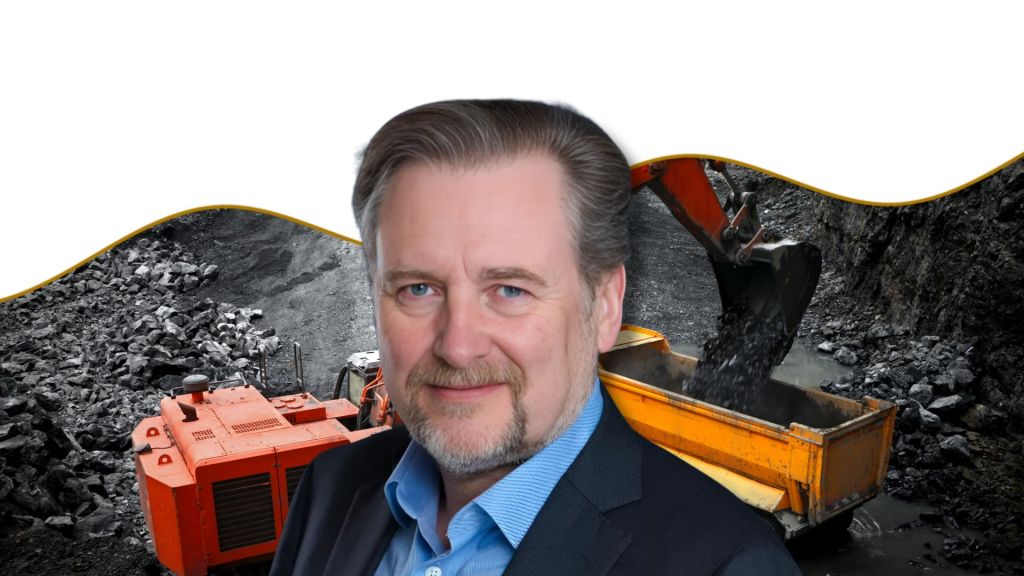
David Finch, CEO of Ixios Asset Management, manages $449M CAD across three mining-focused funds. He is bullish on gold due to structural central bank buying and sees long-term potential in tin for 2025. However, he remains cautious on silver and skeptical about a frenzy in junior mining M&A. His investment strategy prioritizes management quality, jurisdictional stability, and long mine lives. The mining sector, historically poor at generating consistent returns, is experiencing positive free cash flow expansion for the first time in years. Regulatory compliance, including ESG, is integral to Ixios’ strategy, mitigating risks in emerging markets. Finch’s insights highlight disciplined stock-picking and long-term thinking as critical to navigating the volatile resource sector.
- 1. Central banks, led by China, are driving demand for gold, decoupling it from US real yields and reshaping global reserve dynamics.
- 2. Finch prioritizes management quality, stable jurisdictions, and long mine lives to separate genuine mining opportunities from hype.
- 3. Tin is Finch’s top pick due to supply constraints, geopolitical risks, and undervalued companies like AlphaMin.
- 4. While higher gold prices have improved free cash flow, large-cap miners lag due to operational inefficiencies.
- 5. Ixios’ Energy Metals Fund leans heavily on copper and tin while maintaining cautious exposure to uranium and lithium.
What is Ixios Asset Management’s Portfolio Breakdown?
David Finch, CEO of Ixios Asset Management, oversees three funds: the Ixios Gold Fund (focused on precious metals like gold and silver), the Energy Metals Fund (centered on base metals such as copper, nickel, and tin), and a newly launched copper-focused fund.
Combined, Ixios manages over €300 million—roughly half a billion “Arctic pesos” (Canadian Dollars).
Approximately two-thirds of their portfolio is allocated to precious metals, reflecting the preferences of Swiss family offices and private wealth managers who seek long-term stability over the cyclical nature of base metals. The remaining funds target strategic opportunities in energy metals and copper.
Why is Gold No Longer Correlated with US Real Yields?
Gold’s historical inverse correlation with US real yields has significantly weakened since the US and EU sanctioned Russian reserves invested in US and Euro government bonds.
According to Finch, this action caused central banks worldwide, particularly in the non-aligned world, to reassess what constitutes a secure reserve. “Reserves are something you dip into during crises,” Finch said. “When issuers of bonds freeze assets due to political disagreements, they’re no longer reserves.” Central banks are now heavily buying gold to avoid such risks, particularly in countries like China, India, and Saudi Arabia. This trend underpins long-term support for gold prices, making gold a strategic reserve asset free from counterparty risk.
Does the Gold Price Now Depend on China?
China’s role in the global gold market has grown dramatically.
Finch highlighted a near-perfect inverse correlation between Chinese 10-year yields and gold prices, underscoring China’s increasing influence. Chinese households, flush with cash and limited alternative investments, are significant gold buyers. “The gold market is shifting from West to East,” Finch explained. Western institutions hold negligible gold allocations, unlike China and other Asian countries.
This structural shift makes Chinese economic policies and household savings patterns more critical to gold prices than traditional Western metrics like US inflation.
Is China Secretly Buying Gold?
Finch strongly believes China’s official gold reserves are underreported.
He cited discussions with bullion dealers during LME Week, where evidence suggested Chinese commercial banks were active in purchasing gold bars. Moreover, China’s ability to buy through alternate entities, such as SAFE (State Administration of Foreign Exchange), allows for unreported acquisitions.
“There is more gold in China’s reserves than they are saying,” Finch asserted, adding that this buying spree is part of China’s long-term plan to reduce reliance on the US dollar.
Is This a Permanent Shift in Global Reserve Dynamics?
Finch believes the shift in global reserves toward gold is not temporary.
“Over the past 50 years, the US has enjoyed the advantage of having the global reserve currency,” he explained.
“China wants a piece of that.” While he dismissed short-term scenarios of dethroning the dollar, Finch noted China’s deliberate moves to increase yuan-denominated trade. With US reserves heavily weighted toward gold (around 70%), China’s current official allocation of 5% signals a long runway for increasing gold reserves—a process Finch believes will take decades.
Do US Interest Rates Still Matter for Gold?
While US interest rates influence gold in the short term due to speculative trading algorithms, Finch sees their importance waning.
“Fundamentally, US rates are much less important now,” he noted. Gold’s price is increasingly driven by strategic purchases from central banks and demand in Asia, reflecting the ongoing shift of influence from West to East.
Why Haven’t Miners Benefited from Rising Gold Prices?
Despite gold’s strong performance, miners as a basket have struggled to deliver commensurate returns.
The sector’s underperformance is primarily due to poor operational results from large-cap companies like Barrick and Newmont, which dominate indices like the GDX. “The gold mining sector has the highest price dispersion of any industry,” Finch noted. While some mid-cap producers like Alamos Gold and Westgold have outperformed, the lackluster performance of major miners has dragged down the sector.
Finch’s funds avoid these top-heavy names, instead targeting mid-cap companies with efficient operations and lower costs.
How Does David Finch Pick Mining Stocks?
Finch’s investment approach emphasizes three factors: management quality, jurisdiction, and asset geology.
“Management is far and away the most important element,” he stated, explaining that he prioritizes teams with proven track records over promising assets.
Jurisdictional risk also plays a significant role; Finch has minimal exposure to West Africa due to heightened political instability.
On the geological front, he looks for assets with long mine lives or clear pathways to reserve extensions. “Longer mine lives reduce the likelihood of procyclical investment mistakes,” he explained.
How Does Finch Differentiate Between Real Assets and Marketing Hype?
Finch relies on management’s credibility and external consultations to separate genuine opportunities from overhyped projects.
“I’m not a geologist, so I can’t pick apart geological models,” he admitted. Instead, he evaluates management’s confidence in their projects and their willingness to invest personal capital. Listening to expert geologists further informs his decisions.
Why is the Mining Sector Historically a Poor Business?
Gold mining has long been a “horrible business,” according to Finch, due to its cyclical nature and inability to generate consistent free cash flow.
However, he noted a recent “massive positive margin expansion” driven by higher gold prices and stabilized costs. “For the first time in living memory, the industry can finance reserve replacements and return capital to shareholders from free cash flow,” he said.
Will Juniors See Increased M&A Activity?
Finch doubts a frenzy for junior miners is imminent.
While strategic acquisitions continue, he sees no sign of the speculative M&A seen in 2011-2012. “The cost of extraction has risen so much that ounces in the ground are worth less,” he explained. Instead, developers with advanced-stage projects and favorable jurisdictions, such as Osisko Mining, are more likely to attract interest.
Is Silver Still Worth Considering?
Silver’s industrial uses and market deficits have not translated into the dramatic price movements seen in past cycles.
“Silver hasn’t done what it did in 2016,” Finch remarked, noting its lackluster performance relative to gold. He attributes this to its dual role as an industrial and speculative asset, making its price dynamics more complex and less driven by monetary demand.
What About Energy Metals?
The Energy Metals Fund’s largest allocation is copper (55%), followed by tin, uranium, and smaller exposures to lithium and silver.
Finch is particularly bullish on tin due to supply constraints and undervaluation. “The tin market is in a tightening wedge,” he explained, pointing to potential geopolitical disruptions in Myanmar and Indonesia. While cautious about lithium, he believes the nuclear story will positively impact uranium over the next five years.
How Does Regulation Shape Ixios’ Strategy?
Ixios operates under stringent regulatory constraints, including a 10% cap per issuer and ESG compliance requirements.
Finch views ESG adherence as essential for mitigating shareholder risk. “Bad governance and environmental practices lead to operational shutdowns and lost value for shareholders,” he said, citing examples from Canada and emerging markets.
What Commodity is Finch Most Bullish on for 2025?
Finch highlighted tin as his top pick for 2025 due to tightening supply and undervalued companies.
“AlphaMin is trading at three times EBITDA with a 12% dividend yield,” he said, emphasizing its attractive valuation despite operating in high-risk jurisdictions like Congo.
Final Thoughts
Finch’s approach to investing in mining and energy metals combines strategic foresight with rigorous due diligence. His insights on shifting gold dynamics, undervalued energy metals, and the importance of management quality offer valuable lessons for investors navigating the complex resource sector. As he aptly put it, “Wealth consists not in having great possessions but in having few wants.”
David Finch Interview
Please note that David Finch has not paid for the creation of this content. However, this website is a business that charges for the creation and publication of content. This means there will always be a potential conflict of interest which means you can never rely on anything said herein.
By consuming this content, you acknowledge that Resource Talks and/or its affiliates and/or their personnel may own, have owned, or will own interests in and/or may have a business relationship with some or all companies/entities mentioned/featured in this publication. You further acknowledge that entities which may be referenced or featured in this publication or their related parties may hold an interest in Resource Talks or its affiliates, which may create further conflict of interest.
The information provided herein is general & impersonal in nature and meant for entertainment purposes only. The reader acknowledges and agrees that the information does not constitute a solicitation of an offer to buy or sell any security or instrument or to participate in any trading strategy. The author is not a licensed investment advisor. He is just another talking head on the internet. He might own shares of companies mentioned in this publication. Always assume he doesn’t know much more than a potato does. The mining & exploration space is among the riskiest sectors to invest in. The risk of anything mentioned in this publication is 100% loss of capital. If you don’t read the official documents provided by the company on http://www.SedarPlus.ca, you will lose all of your money.