
READ TIME: 9 MINUTES / SPONSORED CONTENT /
—
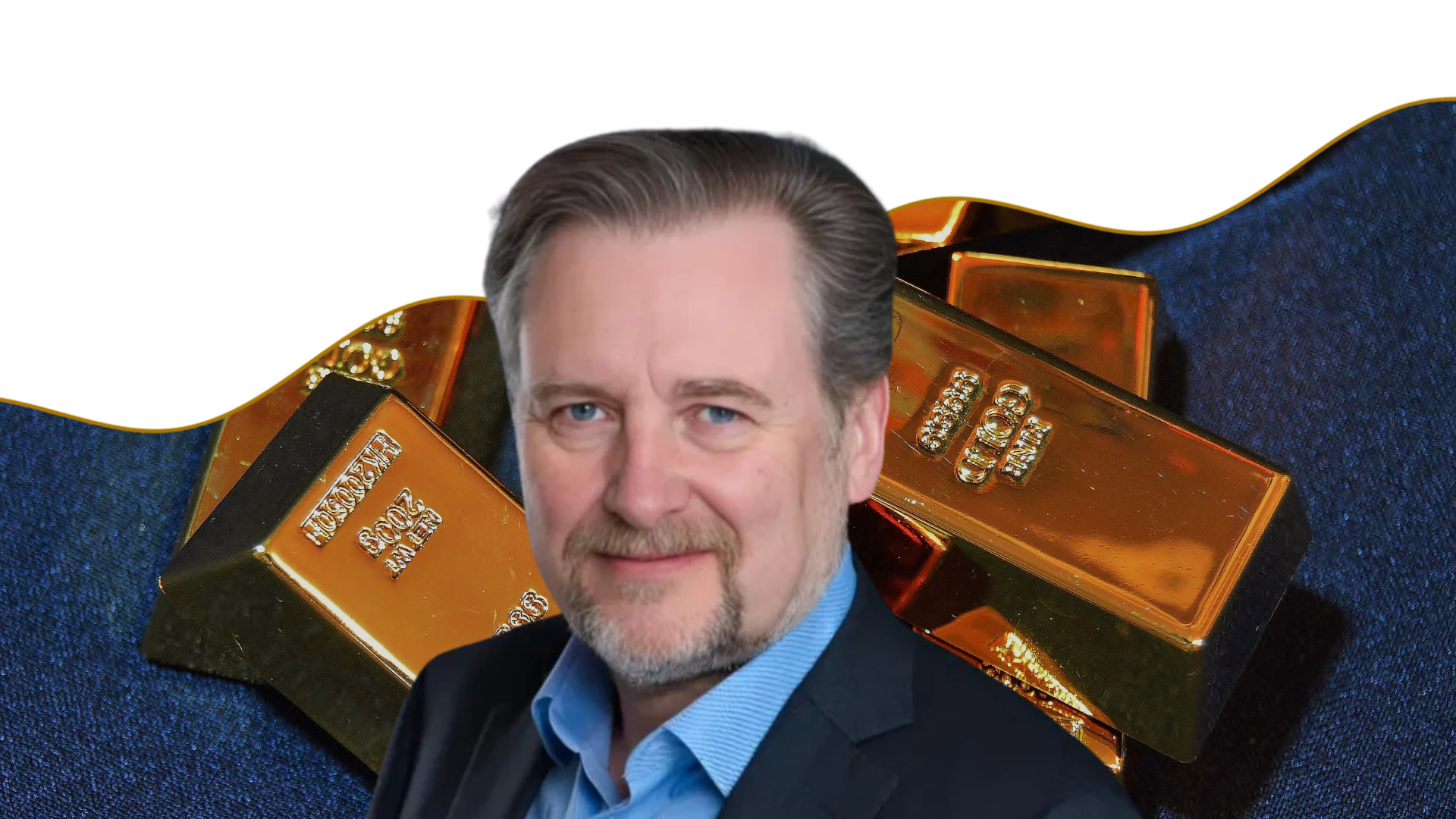
XXIX Metals is advancing two copper projects in Canada; Opemiska in Quebec and Thierry in Ontario, under the leadership of newly appointed CEO Guy Le Bel. With C$6.4 million in current assets and no long-term debt, the company aims to complete a PEA at Opemiska by Q3 2025 and refine the geological model at Thierry. Le Bel was brought in to steer both assets toward feasibility and permitting, with a long-term objective of de-risking the assets for a potential sale or strategic transaction.
TL;DR
- 1. New CEO Guy Le Bel is focused on advancing the Opemiska project through to feasibility and permitting, emphasizing his strengths in technical evaluation and de-risking over exploration or construction.
- 2. The updated 2025 mineral resource estimate for Opemiska is viewed as a ‘game changer’ due to a steeper pit design, lower strip ratio, and inclusion of economic stockwork mineralization.
- 3. XXIX Metals has no immediate need to raise capital but remains open to opportunistic financing, aiming to complete a PEA for Opemiska by Q3 2025.
- 4. The Thierry project may offer a significant upside, with early signs of increasing copper grade at depth and a new geological model under evaluation.
- 5. Despite market skepticism following the new MRE, management remains confident in the value of its assets, attributing weak stock performance to a communications gap rather than fundamentals.
Is the new CEO the right guy for the job?
Guy Le Bel is a mining engineer with a master’s in rock mechanics and an MBA.
He has worked with companies such as Cambior, Rio Tinto, Quadra, and Capstone. Le Bel previously interned at Opemiska and expressed a personal interest in returning to the project. “I’ve seen probably a thousand projects through due diligence,” Le Bel noted, adding that his role is to bring the project to feasibility and permitting.
Has he made money for shareholders before?
Le Bel highlighted his role at Quadra Mining, where he was among the early employees.
The company grew from a C$100 million valuation to a sale worth C$3.5 billion. He also referenced successful exits at Golden Queen and Akila, where projects were sold or received acquisition bids under his leadership.
Why was he brought on now?
Le Bel identified Opemiska as one of three standout projects early in his career. After discussions with the company’s leadership and the release of an updated mineral resource estimate, he was brought in to advance the project through its technical and permitting phases.
“I’m not an explorationist or builder. My core skill is in technical and permitting,” he stated.
How will he align himself with shareholders?
Le Bel does not purchase shares on the open market due to insider trading concerns but stated he would participate in any equity financings.
“When we do a share issue, I’ll be there,” he said, adding that he aligns with shareholders by focusing on long-term value creation rather than short-term market moves.
What are the next steps for XXIX?
The company is moving the new Opemiska resource into a PEA, targeted for Q3 2025.
Field crews will conduct prospecting and collar verification over the summer. Depending on funding, XXIX may begin further drilling and geophysics. The PFS would follow these technical studies, ideally within 12 months.
The planned drilling at Opemiska’s Cook area is expected to cost around C$1 million. Completing the PEA will cost C$300,000–C$400,000. If the Thierry drilling program advances, it could require over C$3 million.
Do they have to raise capital soon?
XXIX has approximately C$5 million in cash and C$1.4 million in marketable securities. According to Guy, capital raises will be done opportunistically.
“We’re not going to burn through the last dollar,” said Le Bel.
Why did XXIX Metal Corp stock fall on the new MRE?
Le Bel attributed this to a perception issue, noting that the market may not yet believe the project’s potential.
He maintains confidence in the project’s fundamentals, stating, “It’s a game changer,” and emphasizes that industry experts and analysts he’s spoken to have positively received the changes. The company aims to correct this disconnect through improved communication and visibility, including interviews like this one.
Why hasn’t Opemiska been taken out?
According to Guy, the project is too small to interest large producers but may attract juniors or smaller strategics. Yet, he says discussions with interested parties are ongoing.
While Le Bel did not name specific companies, he stated the asset is better suited for a full acquisition rather than a joint venture due to its size.
Why did the indicated resource fall?
The indicated resource declined due to more conservative economic assumptions and adjustments to 3D modeling. These include better accuracy for underground openings, which affected classification.
“The 25 million tons is not lost, it’s simply below the pit floor,” Le Bel stated.
Why are the pit walls steeper?
A historical underground stope, the “glory hole,” has maintained vertical stability for decades. Le Bel, with his geotechnical background, argued for steeper pit walls, reducing the pit’s footprint.
Will they have to move the highway?
It is uncertain. Le Bel prefers the highway be moved for operational safety but notes discussions are premature.
Will the strip ratio be lower?
The updated resource reduced the strip ratio from about 8 to around 4. The PEA may show a ratio closer to 3.
Guy added, “The strip ratio is not a design variable. I don’t design for a strip ratio in mind; we stop when we get the profit that we want.”
Will the lower grade stockworks be economical?
Tests suggest stockwork at 0.4% copper equivalent is economically viable if surrounding higher-grade material is also mined.
Does the stockwork have continuity and scale?
Yes. New modeling adds continuity and scale by including mineralized zones between structures.
“You can see it in the drill holes,” Le Bel said.
How tight do they have to drill?
Some infill drilling will be needed to support a PFS. The company will follow QP recommendations for drill spacing.
How consistent is the stockwork?
Le Bel said the structural zones are consistent and predictable, based on veining patterns visible in both drill cores and field work.
The stockwork averages 0.4% copper equivalent. The cutoff for resource reporting is 0.15%.
Le Bel believes the 1% zones drive value, and the stockwork at $32/ton provides room to cover costs. “It can carry $3 US mining,” he noted.
Is silver economically recoverable?
Silver and gold will float with copper in processing. Recoveries are modest but not penalizing. “It’s part of the deal. It was there before,” Le Bel said.
Some variability is expected, but no major issues are anticipated. Historical mining included stockwork unintentionally, indicating compatibility.
What’s the main challenge for Opemiska?
Le Bel identified social license as the key challenge. Engagement with the local town of Chapais is ongoing and will intensify once the PEA is complete.
Le Bel ruled out physically moving homes. If needed, homes would be bought and new ones provided elsewhere in town. Discussions will begin after the PEA.
Why/how is this a ‘game changer’?
The updated resource model results in a smaller pit with more metal and lower costs. Including stockwork improves economics and operational flexibility.
What’s Guy’s favourite project?
Le Bel has a personal preference for Opemiska due to his past connection, though he said Thierry may have larger long-term potential.
What’s new at Thierry?
At the Thierry project, XXIX Metals is developing a new geological model based on historical and recent drilling data.
The updated interpretation suggests that copper grades increase with depth, indicating a potential for a high-grade, deeper core. To validate this, they plan to drill deep ring patterns at K1, the primary zone, and if successful, they may move to a larger-scale program. The new model could significantly expand the resource base and make the project suitable for an open-pit followed by underground mining.
How confident are they in the new model at Thierry?
Le Bel is “fairly confident” in the new canoe-shaped model, expecting increasing grades with depth. Drilling will test this concept.
Is grade consistent?
The deeper high grades appear concentrated in specific areas. Further drilling will determine if this trend continues across the deposit and at depth.
What are their expectations for metallurgy?
Le Bel explained that copper and platinum group metals (PGMs) should be recoverable at Thierry, as historical operations produced copper concentrate with PGM credits.
However, nickel metallurgy is considered difficult, and past operators did not produce a nickel concentrate. XXIX plans to first confirm the presence of higher-grade copper zones at K1 before investing in further metallurgical testing, especially for nickel.
When will they work on Thierry?
A field program is scheduled for summer 2025, focused on ground truthing drill collars and prospecting. Infrastructure will also be refurbished.
Will their G&A go up in 2025?
No increase in G&A is planned. Current staffing levels are adequate for the planned work.
What keeps Guy up at night?
Guy said the main concern that keeps him up at night is ensuring XXIX Metals has enough capital to execute its plans.
Advancing engineering studies at Opemiska and concept drilling at Thierry are costly, and while the company is technically confident in both assets, securing funding is essential. “We depend on the investors,” Belleau noted, emphasizing that technical challenges don’t worry him, but financial constraints and the need for disciplined spending do.
When’s the next news release?
No specific date was given, but updates are expected following the summer field program and completion of the PEA for Opemiska.
XXIX Metal interview with CEO, Guy Le Bel
VERY IMPORTANT WARNING
Please note that Resource Talks has received monetary compensation from XXIX Metal for the production of this content and the host owns shares of it. This website is not a research platform – it’s a business that aims to receive compensation for the creation and publication of content from the parties that it covers. This means there will always be a potential conflict of interest which means you can never rely on anything said herein.
By consuming this content, you acknowledge that Resource Talks and/or its affiliates and/or their personnel may own, have owned, or will own interests in and/or may have a business relationship with some or all companies/entities mentioned/featured in this publication. You further acknowledge that entities which may be referenced or featured in this publication or their related parties may hold an interest in Resource Talks or its affiliates, which may create further conflict of interest.
The information provided herein is general & impersonal in nature and meant for entertainment purposes only. The reader acknowledges and agrees that the information does not constitute a solicitation of an offer to buy or sell any security or instrument or to participate in any trading strategy. The author is not a licensed investment advisor. He is just another talking head on the internet. He might own shares of companies mentioned in this publication. Always assume he doesn’t know much more than a potato does. The mining & exploration space is among the riskiest sectors to invest in. The risk of anything mentioned in this publication is 100% loss of capital. If you don’t read the official documents provided by the company on http://www.SedarPlus.ca, you will lose all of your money.