
READ TIME: 22 MINUTES
—
Aston Bay (TSXV: BAY) is a small-cap exploration company with a 20% free-carried stake in the
Storm copper project in Nunavut, Canada, where partner American West is leading development.
CEO Tom Ullrich is focused on low-capex, near-term production of direct-shipping ore, backed by
a PEA due in Q3 2025. While exploration drilling targets deeper sediment-hosted copper, Aston Bay
is also advancing its 100%-owned Epworth project. Ullrich sees major upside through smart capital
use, strategic partnerships, and careful project control, backed by insider alignment: “I’m going to
make money the way the shareholders do.”
TL;DR
- 1. Aston Bay holds a 20% stake in Storm, where a PEA is due by Q3 2025, with the goal being a fast, low-impact path to production.
- 2. Deeper drilling will test MT geophysical targets potentially linked to large-scale copper systems.
- 3. Ullrich owns 5% of the company and has personally lent nearly $1M to Aston Bay.
- 4. The company prefers raising capital only to add value or drill high-conviction targets.
- 5. After years of limited visibility, Aston Bay is preparing to reintroduce itself to a larger audience by growing its marketing program.
Is This the Right CEO for Aston Bay?
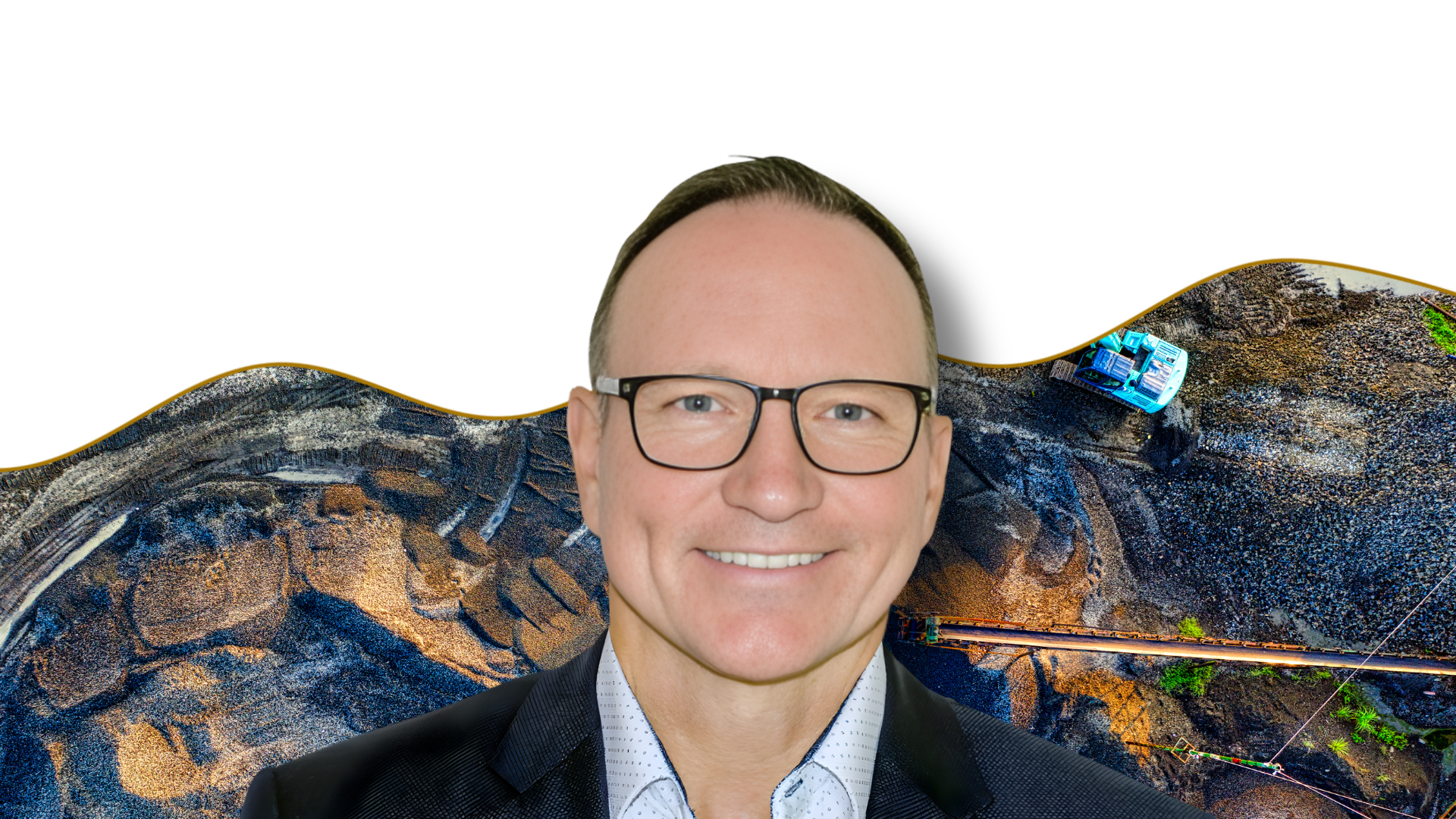
Tom Ullrich became CEO of Aston Bay in 2018 after serving as VP Exploration. “I’ve been in
geoscience for the past 30 years,” he said, including senior roles at Phelps Dodge and Antofagasta
Minerals. Drawn by the Storm project, he explained, “I actually came to Aston Bay because I loved
the Storm project.” Though this is his first time as CEO, Ullrich initially joined as VP Exploration
and took over leadership in 2018. “The real prize… is what that high grade at the surface may
indicate could be hidden at depth.”
Would he do the 80/20 again today?
CEO Tom Ullrich stands by Aston Bay’s 80/20 joint venture with American West, calling it “a
fantastic partnership” despite initial criticism: “I got a lot of crap when I signed that deal… people
said, you know, giving it away.” He contrasted it with a past deal with BHP, which he said likely
would’ve led to dilution: “You will never be able to continue to contribute and stay in the deal.”
By partnering with another junior, Ullrich believes Aston Bay retains meaningful upside: “To have
given up 80%… but maintain that 20%… that is a lot of value for us.” He emphasized that American
West has already spent “over several times the market cap of my company,” and shares their
urgency: “They’re hungry like we are.”
Does the CEO have other jobs?
Tom Ullrich holds one other board position, with Aurania , led by Keith Barron, “a fantastic
explorationist” and discoverer of Fruta del Norte. However, he clarified, “Most of my time is with
Aston Bay,” and described the Aurania role as “just a minor oversight.” Regarding ownership,
Ullrich stated, “Insider ownership here with Aston Bay is noted as 7% of the company.”
Did the CEO pay for his shares?
Tom Ullrich personally owns about 5% of Aston Bay, stating it was “all bought in financing… and I did exercise some options.” He added that in a tough period, “I have lent a considerable amount of funds to the company, up to almost a million dollars.” He believes it was “money very well put to very good use.” His average share cost is “around 14 cents.” Despite owning shares at an average cost “around 14 cents,” above the current market price, Tom Ullrich plans to keep buying: “I bought a bit this year already… I will be in the market buying again.” He noted he’s participated in “every placement we’ve ever put out” and has been “steadily accumulating over the last eight years.” He summed up his stance simply: “I’m a buyer and a holder.”
Does the team have enough experience?
Aston Bay operates lean, with Tom Ullrich as “the only real full-time employee” and supported by part-time IR and CFO roles. To manage exploration, the company relies on Apex Geoscience: “They’ve been essentially running all the geology… from the very beginning.” Ullrich values this model for its flexibility and cost-efficiency: “You can turn it on and off when we need it,” and “it keeps our burn down.” Apex’s continuity and experience, “the same geologist since 2012”, provide technical consistency despite the seasonal nature of work at Storm.
Is working with consultants the right thing to do?
Tom Ullrich is confident in using consultants over full-time staff, even for motivation: “I would change this system if I didn’t think the crew at Apex… were not dedicated.” He noted long-term commitment from key personnel: “It’s been that one geo… he wants his name on this project.” The consistency and seasonal return of the same team creates strong alignment: “When people get on the project they want to stay there and come back every summer.” He believes this model yields a sharper, more versatile workforce: “I get a much more well-rounded team this way.”
Do insiders own a royalty on the projects?
No insiders at Aston Bay hold royalties on company projects: “Nobody within the company has any other connection in any way.” Ullrich confirmed the board is fully independent and provides no external services: “It’s completely separate.” On compensation, there are no structured bonuses or incentive programs beyond annual stock options: “At the moment, we don’t have any structured incentive programs… the compensation committee decides on the awarding of options once a year.” He added, “A couple of my board members have suggested it might be time to start… but it’s still in discussion.”
How is executive compensation determined?
Tom Ullrich receives a flat salary and annual stock options, but has “no plans” to ask for more: “I’m well compensated for what I do… I worked for the company for six years without a raise.” He emphasized shareholder alignment: “I own 5% of the company… I’m going to make money off this the way the shareholders do.”
What’s the history of the flagship asset?
The Storm copper project was originally discovered by Cominco in the 1990s when geologists found “broken calcite at the surface… the most spectacular showing of surface copper I’ve ever seen.” Although Cominco (later Teck) drilled several holes, they let the claims lapse due to insufficient scale and their focus on larger assets like Red Dog. Aston Bay eventually acquired the property after its former CEO “understood the significance of high-grade copper at the surface.” Ullrich noted, “We signed a straight earn-in agreement… eventually bought them out completely.” Early interest came from Antofagasta and later BHP, which “shone a spotlight on the project.” Ullrich joined the company in 2016, attracted by its deeper potential.
What’s the business plan for Aston Bay Holdings?
Aston Bay holds a 20% free-carried interest in the Storm project until a mine-build decision. CEO Tom Ullrich emphasized the value of staying in the deal without dilution: “I wanted to be able to stay in the deal… not get diluted down.” The goal is to develop a “modified DSP” operation with low capex: “We’re shooting for sub-$50 million capex,” with 80% covered by Ocean Partners in exchange for offtake. He highlighted the strategic partnership with Ocean Partners as validation: “It proves what I’ve been telling everybody, that this product is very desirable.” With American West funding all development and a simple, low-impact permitting path, Ullrich concluded: “I’d be very happy to have 20% of the revenue… and not have to get diluted down.”
What stops American West from going too quickly?
Tom Ullrich addressed concerns about American West fast-tracking the project and forcing Aston Bay into costly contributions. He emphasized the timeline is intentionally tight: “We are talking a few years here… a very near-term situation.” He expects a swift path from feasibility to production: “The time from bankable feasibility to actual production is going to be extremely short.” To manage dilution risk, he noted, “We anticipate our contribution portion will be on the order of $2 million,” which aligns with Aston Bay’s current cash position. As a result, “I don’t see it causing significant dilution.”
What’s the potential size of the deposit they’re after?
Aston Bay’s Storm project targets a sediment-hosted copper deposit, similar to “that sort of central African style,” with the current Cyclone zone seen as “a small version” of that model. The mineralization is flat-lying, up to “about 80 meters thick,” and hosted in permeable horizons that likely acted as chemical traps. Most of the resource is in chalcocite, which Ullrich emphasized is “80% copper” and “has very significant physical property contrasts with the host rock,” making it ideal for ore sorting. He stated, “You can get a very high-grade product using ore sorting,” describing the method as “low capex, ESG friendly, and low energy intensive.” With 162,000 tonnes of contained copper, he noted the potential value: “If you think about… $10,000 a ton for copper… that’s a significant potential value… if we can extract it with a micro capex type of operation.”
How’s infrastructure in Nunavut?
Aston Bay plans a ~40 km road from the Storm project to the coast, crossing flat, dry terrain: “It’s road bed all at the surface… we think it’s a very easy road to put in.” The team is conducting environmental and geotechnical work, and expects “low impact” construction with “no bridges” and minimal earthworks. For shipping, they’ll use the Arctic sealift system: “It’s a very efficient way to get material up there but also very efficient way to get material off.” Ore will be upgraded via ore sorting and transported in “big bulker bags or one-ton sacks,” then loaded onto larger cargo ships, similar to “what a lot of the mines in Central Africa do.”
Does Aston Bay expect to be taken out before BFS?
Tom Ullrich emphasized Aston Bay’s intent to remain in the project through to production: “The way the deal is structured, we can stay in the deal… and I’m definitely going to take a hard look at it.” He sees near-term revenue as a key value driver: “It could be a significant amount of money coming into Aston Bay every year… enough to fund further exploration but also potentially dividend back.” He believes there’s major exploration upside beyond the current resource: “We’re going to be making that [deposit] bigger this summer,” noting a new MT geophysical survey aims to identify deeper targets. Every near-surface conductor drilled to date “has hit copper,” and upcoming work will test a large deep conductor: “It’s about 500 meters down… to see a conductor that deep is very exciting.” On strategy, he concluded: “I want to stay in at 20% rather than sell out… I think it’s the best thing for the shareholders.”
When is production expected?
Tom Ullrich believes Aston Bay could see revenue relatively soon from its 20% stake in Storm: “It could happen very quickly.” He cited permitting as the main milestone: “The permitting process is anticipated to take 18 months,” based on Nunavut government guidelines and validation from experienced engineering partners. The proposed development is designed to be fast and low impact: “The build itself is on the order of one season… most of this equipment is going to be bolt-together kind of an operation.” He added, “If we can get things permitted, that allows us to ramp up development.”
When will they do some test mining?
Test mining at the Storm project could begin as early as 2027. Ullrich explained, “We have very high-grade rock right at the surface… the initial would be a scoop operation,” possibly followed by some blasting. However, Arctic logistics present timing challenges: “You have to have already thought about it… to get it on the ship and up there.” Seasonal constraints mean equipment and ore shipments can only occur in narrow summer windows: “You’d get in end of July into August.” Despite delays, Ullrich remains confident: “It worked at Polaris… it worked at Nanisivik… it’s all very doable.”
What is the goal of the drilling in 2025?
In 2025, Aston Bay’s drilling will target three main areas: geotechnical drilling to advance permitting, resource expansion with an RC rig, and high-priority exploration using diamond drilling. CEO Tom Ullrich noted, “There’s really going to be three targets,” with the most excitement around deep exploration: “The thing that could knock it out of the park.” A large mobile MT survey is underway to guide diamond drilling below 200 meters. “We think we can get that MT survey done in the next three to four weeks… and I’m super excited to see what that MT survey shows.” Past surveys revealed gravity anomalies and consistent sulfide hits, but Ullrich believes conductivity data will be more predictive: “We haven’t seen anything that conducts electricity in the subsurface other than sulfide and calcite.”
How much of the drilling will be focused on the deeper targets?
While some 2025 drilling will support permitting and resource expansion, the core focus is on deeper exploration. “The RC rig will be focused on the near surface stuff,” Ullrich said, but emphasized, “Most of the drilling is going to be focused on the deeper stuff.” After logistical constraints limited diamond drilling in 2024, this year the team is fully supplied: “We put over $4 million worth of supplies… right on the coast.” With American West now well-funded, Ullrich confirmed their shared goal: “They’ve seen that resource expansion drilling is not going to move their share price… the way to do that is an aggressive exploration program.”
What are the priority areas?
Though seven target areas have been identified, Tom Ullrich emphasized that priorities will shift based on new data: “Everything’s going to change when we see [the MT survey].” The top priority is re-entering hole three, which targets a “very large conductor at depth” beneath the Cirrus deposit: “It fits the geological model… it’s right where it should be.” That hole was abandoned in 2024 due to lost circulation in a porous zone, but Ullrich views that as a good sign: “That open space filling, that’s exactly what you want… it’s a requirement” for copper mineralization. Once that hole is completed, further targeting will be guided by the results of the ongoing MT survey.
When does drilling start?
Drilling in the High Arctic is heavily constrained by weather and daylight. “You’re only there for… 3 months is kind of really the good time,” Ullrich said, noting helicopter dependency as a major limitation: “If the helicopter’s not flying, you’re not working… you’re just bleeding money.” Camp setup is currently underway to complete the MT survey before drilling ramps up in earnest. While diamond drilling is difficult early in the season due to frozen water sources, operations typically run from late June through September. Looking ahead, mine development could change that: “We anticipate that we would run almost year-round,” using trucks and tracked vehicles like the Polaris mine did.
When will they have assays out?
Assay results from Aston Bay’s 2025 program are expected around September. As Tom Ullrich put it: “September is really… the most realistic.” While earlier RC drill results may be released, he noted, “the market generally discounts the value of that.” The real excitement will come from deep exploration holes: “It’s those discovery potential drill holes that… gets things really going.” He recalled a 2023 example where market speculation drove the share price up sharply on modest visual results, cautioning that while excitement helps, it’s “backed up with assays” that truly matters.
Will they release visual assays?
Aston Bay expects assay results in September, but may accelerate disclosure if they hit something significant: “If you did hit something really significant, I think we would have to… put out visual results.” However, Ullrich prefers waiting: “The better thing to do is wait for those assays.” The North American PEA, based on current resources, will be released in Q3 2025: “I want to get that North American PEA out so that I can speak to some numbers.” The summer drilling won’t be included but will inform a JORC resource and PEA update by American West in the fall, possibly leading to a PFS. Aston Bay may also update its NI 43-101 resource “by end of the year or earliest 2026.”
Will they have the PEA out on time?
Aston Bay expects to release its North American PEA within “the next couple of months.” Ullrich acknowledged delays but clarified it’s normal for NI 43-101 processes: “The North American rules are a bit more stringent… the report is much more involved.” He stressed that timing is largely out of their hands: “You can’t push on a rope sometimes… these are all independent guys… doing other projects as well.” Still, he remains confident: “We expect to have it soon here… just get all the engineers to sign off.”
How tight will the drill spacing be?
Tom Ullrich acknowledged that tighter drill spacing may be required to upgrade Aston Bay’s current resources: “Definitely more would need to be done here.” Drill density will depend on the style of mineralization, whether it’s stratigraphically or structurally controlled. He noted that models like Kamoa-Kakula used wide spacing: “Their drill spacing was on the order of 500 to 600 meters… because the mineralization there was so consistent.” However, Arctic conditions and capex realities may influence decisions: “If you’re only putting a small amount of capex in, I think you can start to take a bit more risk.”
When will the publish met work?
Aston Bay has already completed initial metallurgical work: “We already have the process flow sheet… press released last year.” While detailed numbers weren’t disclosed due to regulatory restrictions, Ullrich confirmed, “The majority of that work has already been done and will be in the PEA.” Regarding news flow, he noted, “PA should come out before any actual results,” and added, “They’ve been working on it for over a month already… hope to get that out soon, before the summer’s out definitely.”
Will they raise capital this summer?
Aston Bay CEO Thomas Ullrich indicated that raising capital is on the table, but only if it adds value: “I don’t mind raising capital if I think I can use that capital to make a discovery… it’s only dilutive if you don’t add any value with it.” He pointed to newly identified large conductors at the Epworth project, saying they could justify a raise: “These are very exciting targets… tens of kilometers long and several kilometers wide… very compelling.” Currently, the company has about $2 million in hard dollars. Ullrich said any raise would likely use Canada’s tax-advantaged flow-through structure: “There has been interest from groups to support us with flow-through money… we’d be spending about 80 cents for every dollar.” Timing for a drill decision at Epworth is still flexible: “We don’t have to make that decision right now… we think that process could be completed in time to get at least a first stage drill program… late summer, early fall.”
How do they plan to raise capital?
CEO Thomas Ullrich acknowledged the challenge of dilution but pushed back on blanket criticism: “I do sort of fight back against calling it dilution… if we make a discovery, we’ve added value.” He emphasized the trade-off between raising capital at the company level vs. partnering at the project level: “You take your dilution at the project level or the company level… with Storm, I used to own 100%, now I own 20%.” While open to a joint venture at Epworth, Ullrich expressed a strong preference to drill first on their own: “My preference would be to at least have the first pokes at it… add some value with maximum upside to the Aston Bay shareholders.”
Are all the permits in hand?
No, the planned drilling at Epworth still requires permit amendments. As CEO Thomas Ullrich explained: “We would have to get the drill locations changed… and probably move the camp.” He remained optimistic that the timeline can be met: “We think that… we can do that within the timeline required to get a season going this year.” “Essentially about two months to get that changed.”
How is the relationship with the First Nations?
At Storm (Somerset Island): Aston Bay has had “really great” relations with the local communities and leaders. CEO Thomas Ullrich noted, “We’ve had meetings with the Hamlet council… they’ve been very impressed.” Local MLA David Akeeagok is also supportive, even praising the site’s appearance: “He said he wore this green shirt because… it was just all green rock and… so beautiful to see.” The company is working outside any restricted zones, with negligible wildlife presence: “We’re not in any restricted zones… the last [caribou] was noted in 1991.” At Epworth (Mainland Nunavut): Relations are being actively developed with the local Hunters and Trappers Association: “I’m trying to get up there this summer to get a meeting with them… probably in July.” Importantly, the area appears less sensitive than surrounding zones: “Epworth is just in this little sweet spot… it’s not a migration route.” On Infrastructure and Sovereignty: The Premier of Nunavut and other officials support the project for its strategic location: “He’s playing the sovereignty card very well… we are literally on the Northwest Passage.” Future access could benefit from a proposed all-weather road being built nearby: “We’re just about 100 kilometers west of this road… great development for us.” The company appears well positioned politically and socially in both project areas.
Do they need climate-change permits in Nunavut?
Nunavut now requires climate change risk assessments for projects. While Aston Bay CEO Thomas Ullrich acknowledged it’s outside his domain, he said: “This is not my sphere… this is going to be handled by the consultants who are experts in this.” He stressed that the company will follow best practices and adapt through its engineering and planning teams: “How climate change would affect our operations… those are just engineering questions really.” While he doesn’t expect it to fundamentally alter their plans, it adds another layer of compliance and long-term design consideration: “You put a road in… it has to be designed to last… and you have to take into consideration trends.”
Why is the stock not going up?
CEO Thomas Ullrich acknowledged the disconnect between the company’s progress and its share price: “You know we were in that 12–13 cent range… then we got into October and… we had some kind of bot… come in and just keep hitting you.” He attributes the persistent downward pressure to small algorithmic trades and general market apathy toward juniors: “You put the resource out and… you’re lucky if [your share price] stays the same.” Despite this, Ullrich remains optimistic that forthcoming engineering reports will shift perceptions: “Once we get those proper engineer-stamped reports… I think people will start to realize what we could have here.”
What are their marketing plans?
“We’re really just starting our marketing efforts here… ramping it up.” Key steps include a new website, updated investor materials, and external help: “We have hired a couple of IR consultants… to help us make those connections.” The main difference this year, Ullrich says, is that they now have substance to promote: “We have something real… a real story to tell. Before, we were selling a dream.” He believes a resource and upcoming PEA will finally make the company more investable to analysts and institutional money: “They won’t look at your project until you have a resource and preferably a PEA… then you don’t have to take my word for it.”
What keeps Tom up at night?
Surprisingly, not much. CEO Thomas Ullrich says he’s sleeping better these days, thanks to the progress being made at Storm: “I sleep a lot better now… the projects are all advancing as I’d hoped.” Rather than worry, he’s focused on the excitement of discovery: “I probably dream more than I worry… I think about hitting those big deep holes and what that would do to a company like ours.” His passion is rooted in past success: “It’s spectacular to make a discovery… that really is what I love.”
Aston Bay interview with CEO, Thomas Ullrich
VERY IMPORTANT WARNING
Please note that although none of the companies mentioned herein have paid Resource Talks for the creation of this content, this website is a business that charges for the creation and publication of content. This means there will always be a potential conflict of interest which means you can never rely on anything said herein.
By consuming this content, you acknowledge that Resource Talks and/or its affiliates and/or their personnel may own, have owned, or will own interests in and/or may have a business relationship with some or all companies/entities mentioned/featured in this publication. You further acknowledge that entities which may be referenced or featured in this publication or their related parties may hold an interest in Resource Talks or its affiliates, which may create further conflict of interest.
The information provided herein is general & impersonal in nature and meant for entertainment purposes only. The reader acknowledges and agrees that the information does not constitute a solicitation of an offer to buy or sell any security or instrument or to participate in any trading strategy. The author is not a licensed investment advisor. He is just another talking head on the internet. He might own shares of companies mentioned in this publication. Always assume he doesn’t know much more than a potato does. The mining & exploration space is among the riskiest sectors to invest in. The risk of anything mentioned in this publication is 100% loss of capital. If you don’t read the official documents provided by the company on http://www.SedarPlus.ca, you will lose all of your money.