
SPONSORED CONTENT
— — —
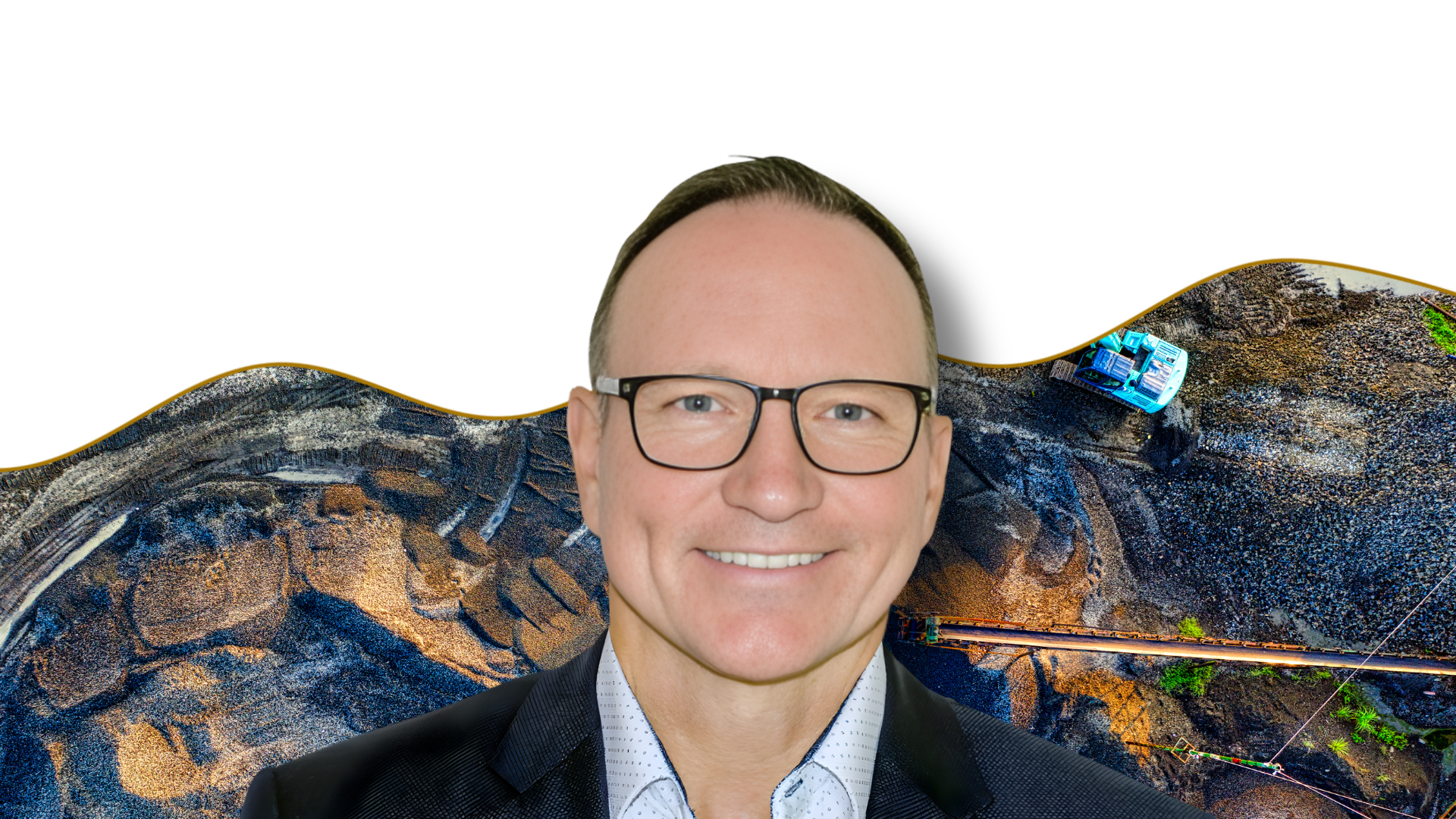
This interview features Fortune Bay’s CEO, Dale Verran & VP Technical Services, Gareth Garlick, and focuses on how the company intends to move its Goldfields project in northern Saskatchewan from an updated PEA into permitting and pre-feasibility work, while keeping two secondary growth levers alive in Mexico (a gold-copper asset that remains gated by community agreements), and in the Athabasca Basin (uranium properties currently being advanced with partner capital). Dale explained his logic of staying below 5,000 tpd to remain within the framework of a 2008 provincial EIS, the need for extra geotechnical, environmental and consultation work that will still be required, and the company’s ability to fund multi-year de-risking without excessive dilution.
TLDR
- Saskatchewan-first, sub-5,000 tpd strategy.
– – – – –
Fortune Bay’s idea is to advance the Goldfields project in northern Saskatchewan by using a sub-5,000 tpd open-pit plan that sits inside the framework of the 2008 provincial EIS. Management’s argument circles mostly around the fact that most ounces are already in the Indicated category, the area is a historic mining camp with existing road and powerline, and an Ausenco-led updated PEA provides a defensible basis for moving to PFS in 2026. Additional geotech, hydrogeology and environmental work will be required before the plan can be described as construction-ready. - Permitting and legacy EIS are the real pacing items.
– – – – –
Permitting and location are treated as the main execution risks. The project is on the shore of Lake Athabasca and the new mine plan contemplates Athona, larger waste rock and a larger tailings facility than the 2008 concept. That means the company must refresh and expand baseline data and re-engage provincially to align the current plan with approvals issued 17 years ago. Legacy EIS does not equate to “fully permitted”. Timelines can shift if regulators insist on more seasonal data or tighter conditions, although Dale says they know how to deal with that. - Mexico is optional, not core.
– – – – –
The Mexican asset is presented as optionality, not as a near-term cash-flow or resource catalyst. The company believes the geology justifies further work, but management is not prepared to advance the project without clear community agreements. The project is there to create future scale, not to fund the company. - Uranium portfolio is carried upside.
– – – – –
The Athabasca uranium properties form a third, lower-risk strand. They were generated in-house but are now being advanced with partner capital, with Fortune Bay acting as operator and earning fees. That structure gives the company exposure to discovery in a high-quality uranium district without stressing the balance sheet needed for Goldfields. It also shows the portfolio will not be rationalised into a single-asset story in the near term. Management prefers to preserve optionality if others are paying. - Capital, dilution and governance stay front and centre
– – – – –
Although the company is well-funded to continue operations over the near term, more capital will be required to fulfill their strategy. Progress at Goldfields is the core determinant of value, Mexico and uranium are secondary until the Saskatchewan plan is demonstrably financeable, which Dale says won’t take too long given the state of the resource.
VERY IMPORTANT WARNING
Please note that Fortune Bay has paid Resource Talks for the creation of this content, this website is a business that charges for the creation and publication of content. This means there will always be a potential conflict of interest which means you can never rely on anything said herein.
By consuming this content, you acknowledge that Resource Talks and/or its affiliates and/or their personnel may own, have owned, or will own interests in and/or may have a business relationship with some or all companies/entities mentioned/featured in this publication. You further acknowledge that entities which may be referenced or featured in this publication or their related parties may hold an interest in Resource Talks or its affiliates, which may create further conflict of interest.
The information provided herein is general & impersonal in nature and meant for entertainment purposes only. The reader acknowledges and agrees that the information does not constitute a solicitation of an offer to buy or sell any security or instrument or to participate in any trading strategy. The author is not a licensed investment advisor. He is just another talking head on the internet. He might own shares of companies mentioned in this publication. Always assume he doesn’t know much more than a potato does. The mining & exploration space is among the riskiest sectors to invest in. The risk of anything mentioned in this publication is 100% loss of capital. If you don’t read the official documents provided by the company on http://www.SedarPlus.ca, you will lose all of your money.