
Inside a VIP Mining Event With a Fund Manager & 9 CEOs
I was asked to host a so-called VIP event at PDAC earlier this month. Although, to be fair, they asked me, so that already raises questions about how VIP this thing really was?!


I was asked to host a so-called VIP event at PDAC earlier this month. Although, to be fair, they asked me, so that already raises questions about how VIP this thing really was?!

This was Robin E. Goad of Fortune Minerals talking about the NICO cobalt-gold-bismuth-copper project in the Northwest Territories, with the downstream processing piece planned in Alberta. The discussion was about the updated feasibility and FEED work, permitting, financing, and what still has to happen before a real construction decision can be made.
Storm Exploration is an exploration company focused on Ontario. Gold Standard is the near-term project and the one Bruce spoke about most, with a road-accessible copper-zinc target that management thinks may fit a VMS model, plus older gold showings on the broader property. Keezhik and Attwood are earlier-stage projects in northwestern Ontario with gold focus and some base-metal upside. The interview was about the Miminiska sale, the balance-sheet reset, planned 2026 fieldwork, and what still has to go right from here.
Salazar Resources is an Ecuador-focused explorer with a 25% carried interest in the El Domo copper-gold project at Curipamba, plus exploration ground including Santiago, Pijilí, Tarqui-Quimi, and Macara. The interview was about what El Domo is worth to Salazar, whether they hold or sell that 25% later, how they plan to restart exploration, how they intend to fund that work, and how they see permitting, social license, and politics in Ecuador.
Sasquatch Resources is a small Vancouver Island-based company with a handful of legacy copper-gold-silver-zinc projects in British Columbia, the most advanced of which is the Mount Sicker waste pile complex near Duncan, BC. The interview covered the company’s unconventional strategy of attempting to process old mine waste piles rather than building a new mine, the state of its permitting application with the BC government, its financial position, and the shape of its project pipeline.
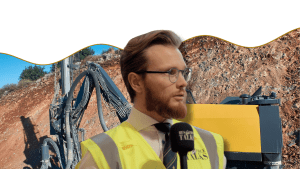
At PDAC, I pulled aside eight companies working the less glamorous but essential side of the exploration business. The drillers, the helicopter operators, the data visualizers, the logistics providers, and the emerging technology players who make every field program possible and I asked them all the same basic questions: how busy are you, what’s holding you back, and what does a good client look like from where you’re standing. What came back was a surprisingly candid look at a bull market from the people actually doing real work.

In this Core Shack episode, I walked the conference floor and got up close with the drill core from some of the junior mining companies I’ve been following over the last couple of months. Some rocks, a lot of geologists, some CEOs, and some questions that probably made a few of them nervous.
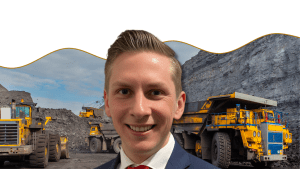
Jordan Roy, is the founder of Mining Stock Monkey, a research platform focused on the mining space. In this conversation, we dug into how he actually evaluates developer-stage mining companies, from the moment a preliminary economic assessment lands on his desk to the decision of whether to invest. We covered how he reads economic studies, what he looks for in the people behind them, how he thinks about jurisdiction and financeability, and what the current gold price environment means for speculators trying to find real value in a market that is anything but quiet right now.

This was, by most accounts, the most crowded and buoyant PDAC in years (maybe ever?). Sushi and lobster at cocktail receptions were the normal thing, and that’s historically been a reliable contrarian indicator, according to the veterans I spoke to. Rick Rule, who said this is his fourth real bull market and expects it to be the second most dramatic of his career after the 1970s, was the most quotable voice of the bunch and set the intellectual tone for most of the conversations that followed.
Inventus Mining operates the Pardo Paleoplacer Gold Project in Ontario, Canada, near Sudbury. The company is led by newly appointed CEO Wesley Whymark, who has been involved with the project since his undergraduate years and recently completed a PhD focused on paleoplacer geology. The conversation covered the nature of paleoplacer deposits, ongoing bulk sampling and toll milling through McEwen Mining, the path to a first resource estimate, a production permit, and the company’s cash position and upcoming catalysts.

Revival Gold is a TSX-listed gold developer with two projects: the Mercur Gold Project in Utah and the Beartrack-Arnett project in Lemhi County, Idaho. The company is led by CEO Hugh Agro. The conversation covered 2025 drilling results at Mercur, metallurgical test work, the path to a pre-feasibility study (PFS) and eventual production, the company’s cash position, financing strategy, permitting progress, and early-stage drilling at Beartrack-Arnett.
Koby Kushner of Libra Lithium talked to me about the lithium in this episode. Are we heading into a real bull market or another short-lived hype cycle? We dig into why China still drives demand and price discovery, why stationary energy storage has become the sleeper catalyst analysts underestimated, and why electrified trucks and developing markets could keep demand surprising to the upside. On the supply side, we get into the swing-supply boogeymen (Chinese lepidolite and African DSOs), what’s changed with Chinese regulations and Zimbabwe export policy, and why flooding the market again may be harder in a much larger lithium market. We also talk incentive prices for new supply, why spot prices can still spike in tight markets, what could actually flip the bull thesis bearish (clays, DLE, and policy-driven supply), and whether lithium juniors even make sense in this environment.
I was asked to host a so-called VIP event at PDAC earlier this month. Although, to be fair, they asked me, so that already raises questions about how VIP this thing really was?!
This was Robin E. Goad of Fortune Minerals talking about the NICO cobalt-gold-bismuth-copper project in the Northwest Territories, with the downstream processing piece planned in Alberta. The discussion was about the updated feasibility and FEED work, permitting, financing, and what still has to happen before a real construction decision can be made.
Storm Exploration is an exploration company focused on Ontario. Gold Standard is the near-term project and the one Bruce spoke about most, with a road-accessible copper-zinc target that management thinks may fit a VMS model, plus older gold showings on the broader property. Keezhik and Attwood are earlier-stage projects in northwestern Ontario with gold focus and some base-metal upside. The interview was about the Miminiska sale, the balance-sheet reset, planned 2026 fieldwork, and what still has to go right from here.
Salazar Resources is an Ecuador-focused explorer with a 25% carried interest in the El Domo copper-gold project at Curipamba, plus exploration ground including Santiago, Pijilí, Tarqui-Quimi, and Macara. The interview was about what El Domo is worth to Salazar, whether they hold or sell that 25% later, how they plan to restart exploration, how they intend to fund that work, and how they see permitting, social license, and politics in Ecuador.
Sasquatch Resources is a small Vancouver Island-based company with a handful of legacy copper-gold-silver-zinc projects in British Columbia, the most advanced of which is the Mount Sicker waste pile complex near Duncan, BC. The interview covered the company’s unconventional strategy of attempting to process old mine waste piles rather than building a new mine, the state of its permitting application with the BC government, its financial position, and the shape of its project pipeline.
At PDAC, I pulled aside eight companies working the less glamorous but essential side of the exploration business. The drillers, the helicopter operators, the data visualizers, the logistics providers, and the emerging technology players who make every field program possible and I asked them all the same basic questions: how busy are you, what’s holding you back, and what does a good client look like from where you’re standing. What came back was a surprisingly candid look at a bull market from the people actually doing real work.
In this Core Shack episode, I walked the conference floor and got up close with the drill core from some of the junior mining companies I’ve been following over the last couple of months. Some rocks, a lot of geologists, some CEOs, and some questions that probably made a few of them nervous.
Jordan Roy, is the founder of Mining Stock Monkey, a research platform focused on the mining space. In this conversation, we dug into how he actually evaluates developer-stage mining companies, from the moment a preliminary economic assessment lands on his desk to the decision of whether to invest. We covered how he reads economic studies, what he looks for in the people behind them, how he thinks about jurisdiction and financeability, and what the current gold price environment means for speculators trying to find real value in a market that is anything but quiet right now.
This was, by most accounts, the most crowded and buoyant PDAC in years (maybe ever?). Sushi and lobster at cocktail receptions were the normal thing, and that’s historically been a reliable contrarian indicator, according to the veterans I spoke to. Rick Rule, who said this is his fourth real bull market and expects it to be the second most dramatic of his career after the 1970s, was the most quotable voice of the bunch and set the intellectual tone for most of the conversations that followed.
Inventus Mining operates the Pardo Paleoplacer Gold Project in Ontario, Canada, near Sudbury. The company is led by newly appointed CEO Wesley Whymark, who has been involved with the project since his undergraduate years and recently completed a PhD focused on paleoplacer geology. The conversation covered the nature of paleoplacer deposits, ongoing bulk sampling and toll milling through McEwen Mining, the path to a first resource estimate, a production permit, and the company’s cash position and upcoming catalysts.
Revival Gold is a TSX-listed gold developer with two projects: the Mercur Gold Project in Utah and the Beartrack-Arnett project in Lemhi County, Idaho. The company is led by CEO Hugh Agro. The conversation covered 2025 drilling results at Mercur, metallurgical test work, the path to a pre-feasibility study (PFS) and eventual production, the company’s cash position, financing strategy, permitting progress, and early-stage drilling at Beartrack-Arnett.
Koby Kushner of Libra Lithium talked to me about the lithium in this episode. Are we heading into a real bull market or another short-lived hype cycle? We dig into why China still drives demand and price discovery, why stationary energy storage has become the sleeper catalyst analysts underestimated, and why electrified trucks and developing markets could keep demand surprising to the upside. On the supply side, we get into the swing-supply boogeymen (Chinese lepidolite and African DSOs), what’s changed with Chinese regulations and Zimbabwe export policy, and why flooding the market again may be harder in a much larger lithium market. We also talk incentive prices for new supply, why spot prices can still spike in tight markets, what could actually flip the bull thesis bearish (clays, DLE, and policy-driven supply), and whether lithium juniors even make sense in this environment.