
READ TIME: 8 MINUTES
We’ve got chlorite-magnetite alteration over potassic rocks, which is a greenish-black material consistent with the depths of Mount Lyell.
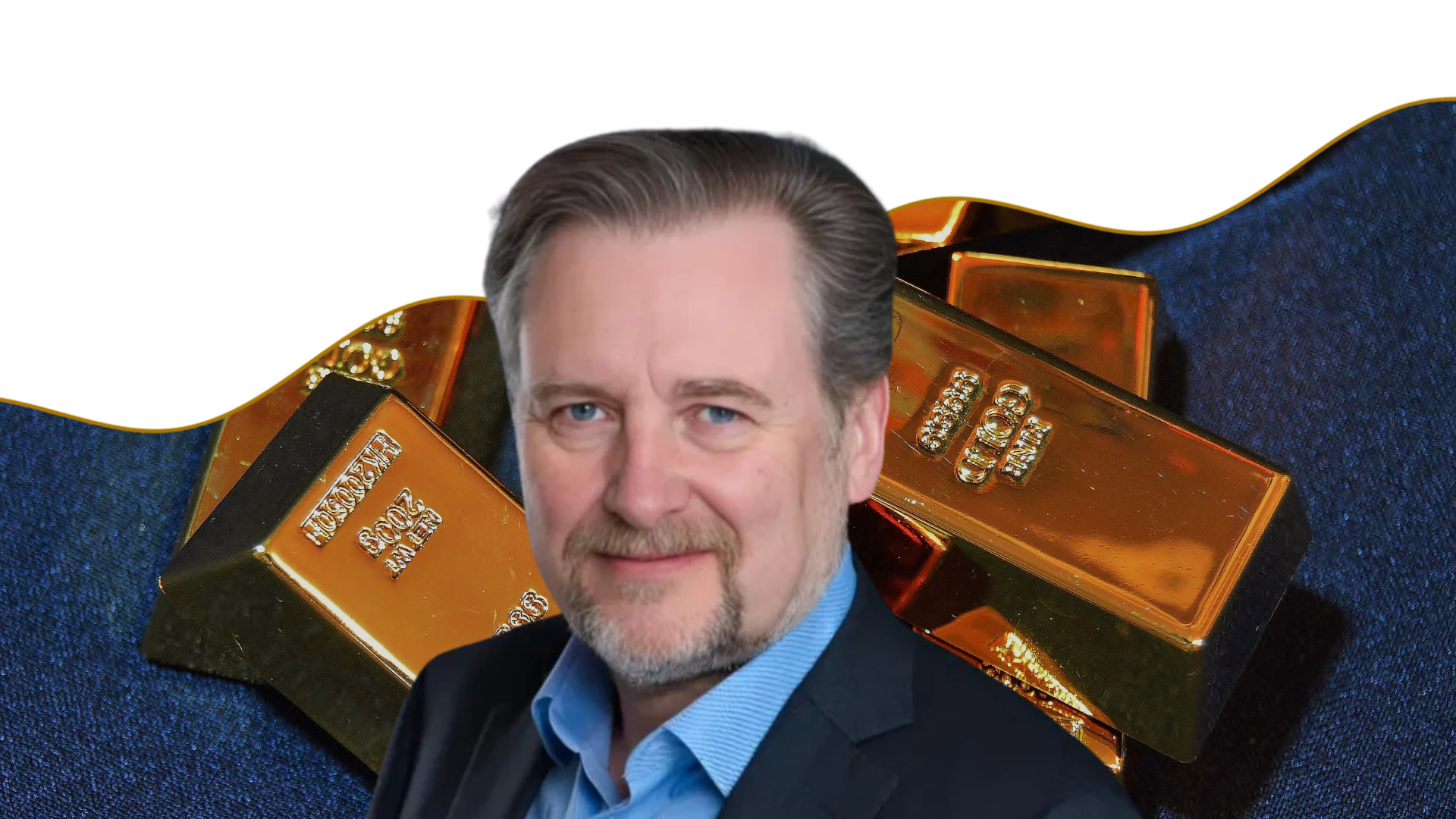
Steve Swatton, CEO CopperCorp (TSX-V: CPER)
Key Takeaways
- 1. CopperCorp’s Jukes project has intersected 90 meters of visually strong copper mineralization, potentially validating its IOCG model and drawing comparisons to world-class deposits like Mount Lyell and Candelaria.
- 2. The decision to release visuals before assay results was a strategic move to maintain investor interest during a roadshow, despite acknowledging the inherent risks of such an approach.
- 3. Drilling confirms the geological model with deep chlorite-magnetite alteration zones, but further work is needed to pinpoint the richest areas within the magnetic anomaly.
- 4. The company is actively engaging with potential major partners, including Japanese companies, to bring financial and technical support for advancing its extensive Tasmanian land package.
- 5. CopperCorp remains financially disciplined, with $3 million in treasury, focusing on cost-effective exploration while keeping partnership opportunities and shareholder value as priorities.
Summary
CopperCorp CEO Stephen Swatton discussed the promising developments at the company’s Jukes IOCG project in Tasmania, highlighting a 90-meter intersection of visually strong copper mineralization, which aligns with their geological model and draws comparisons to deposits like Candelaria and Mount Lyell.
While assay results are pending, Swatton defended the rare decision to release visuals first to maintain investor engagement during a European roadshow. The company’s exploration efforts confirm key geological features, including deep chlorite-magnetite alteration, but further work is needed to refine high-grade targets. CopperCorp is attracting interest from major players, particularly Japanese companies, as it seeks partnerships to support its vast 2,000-square-kilometer land package.
With $3 million in treasury and a disciplined approach to exploration, the company is positioned to advance its strategy while balancing shareholder value and partnership opportunities.
What is CopperCorp’s story, and do European investors like it?
CopperCorp’s CEO, Stephen Swatton, presented a compelling narrative to European investors during a recent roadshow. The centerpiece of the story is the company’s Jukes IOCG (iron oxide copper-gold) project in Tasmania, where drilling has intersected 90 meters of what appears to be copper-rich mineralization. This discovery is on the eastern side of a magnetic anomaly that closely resembles the Mount Lyell deposit, a nearby historical mine with 3 million tons of contained copper.
Swatton admitted that CopperCorp hadn’t entirely expected such an extensive mineralized zone in this particular area. “These are just visuals,” he cautioned, “and obviously, you can sometimes get surprises.” Despite the cautious optimism, the news has generated excitement among investors, particularly in Europe, where the visual evidence of mineralization resonated strongly. Swatton’s decision to release visuals before assay results—a rare move for the CEO—underscored the need to provide tangible updates to investors while on tour.
Why release visuals before assay results?
When asked about the unusual decision to release visuals ahead of assay results, Swatton defended the strategy, highlighting the exceptional nature of the discovery. “I’ve rarely seen this length of continuous mineralization in my career,” he said. The visuals showed semi-continuous chalcopyrite and magnetite alteration, which aligns with IOCG mineralization styles.
Swatton explained that the visuals served a practical purpose. “I was on a road tour, and people were asking, ‘How’s the drilling going?’ I needed something concrete to talk about,” he said. While acknowledging the risks of premature disclosure, he added, “This level of intersection will certainly come on the radar screen of quite a few majors.”
Does drilling at Jukes confirm IOCG-style mineralization at modeled depths?
CopperCorp’s exploration efforts at Jukes appear to confirm the presence of IOCG-style mineralization, aligning with the geological models the company has developed. Swatton noted, “The anomaly goes down for another 1,000 meters from what we’re modeling right now, and at surface, we’re drilling the southern end, which spans 500 meters.”
The mineralized zone’s characteristics—chlorite-magnetite alteration atop potassic rocks—are consistent with IOCG systems. The company’s strategy is now focused on testing additional targets with similar magnetic and geophysical signatures. According to Swatton, “We’re on the cusp of something very interesting.”
Does alteration and mineralization at depth align with surface drilling?
The deeper zones at Jukes reveal a different alteration style compared to surface mineralization, a hallmark of large IOCG systems. Swatton explained that at depth, “We’ve got chlorite-magnetite alteration over potassic rocks, which is a greenish-black material consistent with the depths of Mount Lyell.”
However, he emphasized that the mineralization is not evenly distributed throughout the magnetic anomaly. “Most of the magnetite is pure and doesn’t contain copper,” he noted. The company’s challenge now lies in identifying the “sweet spots” where magnetite-rich zones transition to copper-gold mineralization.
Is the mineralization linked to the magnetic anomaly?
The Jukes magnetic anomaly appears to be directly related to the intrusive system driving mineralization. Swatton clarified, “The intrusive body comes from depth along a fault, and as it ascends, it precipitates different minerals.” The magnetic signature is due to magnetite, a key indicator of the mineralizing fluids’ path.
Swatton drew comparisons to Mount Lyell, where mineralization transitions from magnetite-rich zones to copper-rich and gold-rich zones at shallower depths. “We’re trying to find that middle horizon,” he explained, where copper and gold are most concentrated.
What about bornite and chalcocite?
CopperCorp has identified traces of bornite, a high-grade copper mineral, but has not yet mapped its distribution within the system. Swatton downplayed its necessity, saying, “You don’t need to have bornite—it’s nice to have, but it’s not critical.”
The breccias and sulfides encountered at Jukes resemble those at Mount Lyell. Swatton described the mineralization as “chalcopyrite-magnetite breccias with textures and compositions similar to Mount Lyell.” Variability in breccia textures reflects the complex pressure and temperature regimes of IOCG systems.
Why is there gold in the system, and what does it mean?
Gold is another key component of the Jukes system. Swatton explained that the presence of gold indicates CopperCorp is targeting a “middle zone” in the IOCG system, where fluid temperatures are optimal for gold precipitation. “We’re not in the hottest bit, and we’re not in the coolest bit either—we’re somewhere in the middle,” he said.
This gold-rich signature sets Jukes apart from CopperCorp’s AMC project, another IOCG target with low gold content but higher cobalt concentrations. The fine-grained nature of the gold at Jukes aligns with regional IOCG systems, where gold typically associates with magnetite rather than arsenic.
How does Jukes compare to other IOCG deposits?
Swatton positioned Jukes as analogous to the Candelaria deposit in Chile, a 470-million-ton IOCG deposit with grades of 1% copper and 0.8 g/t gold. “Our geologists have drawn direct associations in terms of mineralogy, tectonic setting, and alteration,” he said.
While Olympic Dam is often the IOCG benchmark, its significant uranium and rare earth content make it an imperfect comparison. Instead, Swatton suggested that Jukes aligns more closely with subduction-related IOCG systems like Candelaria or Salobo in Brazil.
What structural controls and follow-up work are planned?
Structural controls remain a key focus for understanding the distribution of mineralization at Jukes. Swatton acknowledged that while recent drilling hasn’t significantly advanced the structural model, it has reinforced the importance of intersecting magnetic and gravity anomalies.
Future exploration will include drone geophysics, surface sampling, and downhole electromagnetic (EM) surveys to refine targets. Swatton emphasized the need for cost-effective strategies, stating, “We want to spend the summer tightening up drill targets to maximize our bang for the buck.”
Is CopperCorp attracting interest from major mining companies?
The recent news has caught the attention of major players, including Japanese companies known for their interest in IOCG systems. “I wouldn’t be staying in Europe another week if I didn’t think it was worth it,” Swatton remarked. He highlighted Nippon Steel (Nippon Tettsu) as one of the companies showing interest, describing the Japanese as “good partners—not too demanding and very knowledgeable.”
Swatton hinted at ongoing discussions with potential partners but remained cautious about disclosing details.
What is CopperCorp’s deal strategy?
CopperCorp is exploring a variety of partnership models, inspired by the deal structure of Inflection Resources, where a major earns equity in the company by funding exploration. Swatton emphasized the importance of financial muscle, noting that CopperCorp’s 2,000-square-kilometer land package is “twice the size of Singapore” and requires substantial investment to explore comprehensively.
While the company currently has $3 million in the treasury, Swatton admitted that larger-scale exploration would require outside funding. “We’re not going to give it away for nothing,” he said. “We’re here for our shareholders, not the big company shareholders.”
What’s next for CopperCorp?
With assay results expected within 10-15 days, CopperCorp is entering a critical period. Swatton remained cautiously optimistic, stating, “The proof will be in the pudding, but either way, there’ll be a deal to be had.”
CopperCorp’s strategy of fiscal discipline and calculated exploration has positioned it well. “We’ve engineered a middle ground,” Swatton said, balancing the competing pressures of conserving cash and advancing the project.
As CopperCorp prepares for its next phase, investors will be watching closely to see if the assays confirm the visuals—and whether a major partner steps in to help unlock the full potential of Jukes.
CopperCorp CEO Interview With Steve Swatton (TSX-V: CPER)
This is a very brief summary of what was a lengthy interview. Don’t rely on this summary. Watch the full interview which is linked above.
Please note that this guest has paid for the creation of this content. The Resource Talks interview rules are simple. The companies, albeit paying or non-paying, get no questions upfront, no questions off the table, and no editing rights.
The information provided herein is general & impersonal in nature and meant for entertainment purposes only. The reader acknowledges and agrees that the information does not constitute a solicitation of an offer to buy or sell any security or instrument or to participate in any trading strategy. The author is not a licensed investment advisor. He is just another talking head on the internet. He might own shares of companies mentioned in this publication. Always assume he doesn’t know much more than a potato does. The mining & exploration space is among the riskiest sectors to invest in. The risk of anything mentioned in this publication is 100% loss of capital. If you don’t read the official documents provided by the company on http://www.SedarPlus.ca, you will lose all of your money.