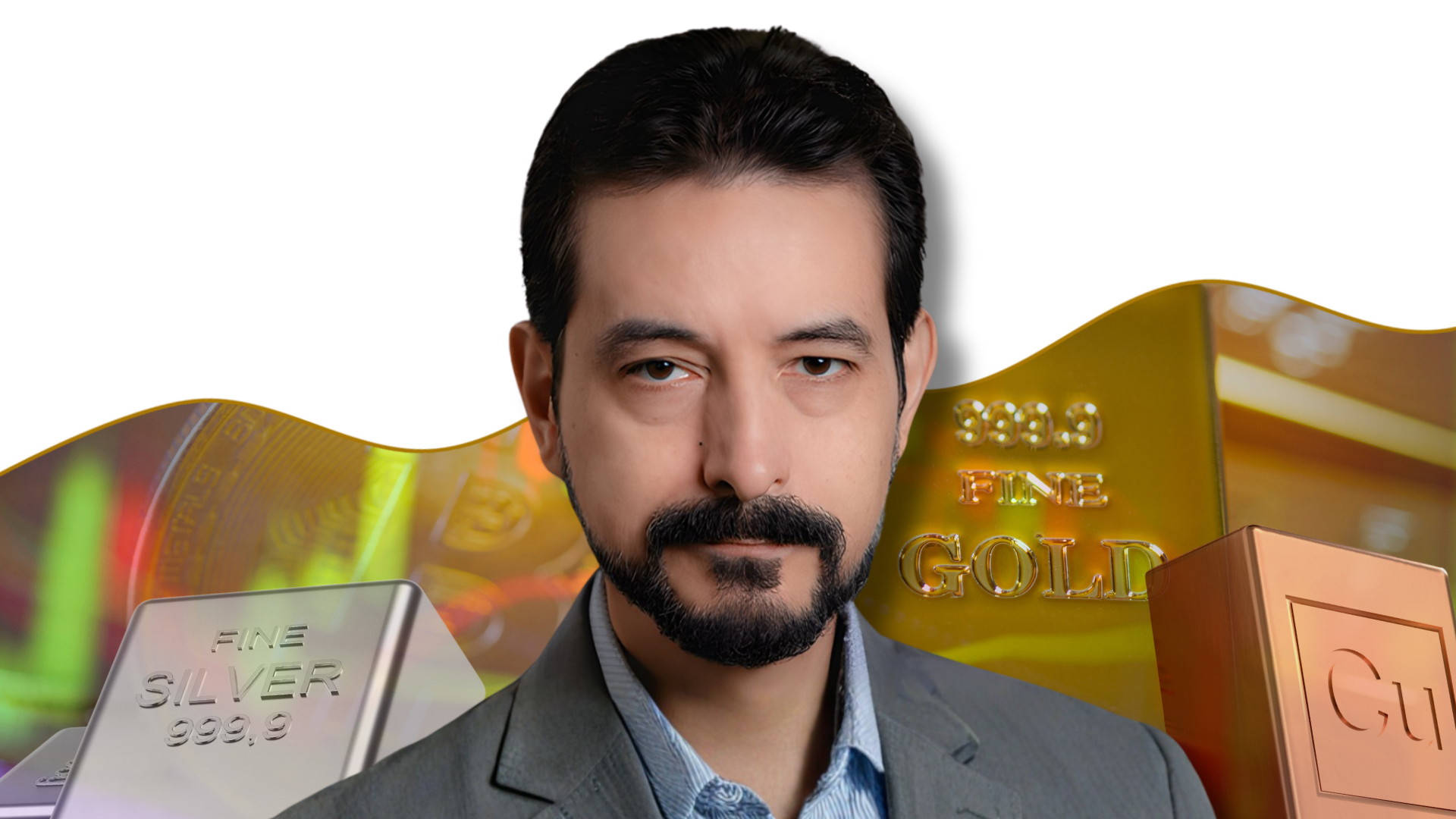


Alaska, often revered for its rugged beauty and abundant natural resources, is again drawing attention from the mining industry. This time, it’s for its potential to host the next major gold mine, led by Contango Ore Inc. (NYSE-A: CTGO). At the helm is CEO Rick Van Nieuwenhuyse, a seasoned geologist with decades of experience and a track record that includes the discovery of one of the world’s largest undeveloped gold deposits. But Van Nieuwenhuyse’s vision for Contango Ore is different—he’s focused on a more streamlined, efficient model for mining that he believes will sidestep the challenges that have plagued other projects in the region.
We didn’t want to spend 10 to 15 years permitting another big mine like I did with Donlin. With Manh Choh, we got the mine permitted in just one year.
Rick Van Nieuwenhuyse, CEO Contago Ore (NYSE-A: CTGO)
In a recent interview, Van Nieuwenhuyse outlined the financials, operations, and strategic direction of Contango Ore with refreshing candor. As a company listed on the New York Stock Exchange, Contango has attracted institutional and retail investors alike. Approximately 43% of the company is owned by institutions, with insiders holding 18%, and the remaining 40% in the hands of retail investors. The company’s finances reflect a solid footing, with $24 million in cash and a debt load that the company is actively managing.
Alaska’s Emerging Golden Triangle
Contango’s story centers around Alaska’s emerging Golden Triangle and its three key projects: the Manh Choh project, the Lucky Shot project, and the newly acquired Johnson Tract. Each of these projects represents a different stage of development, but all are tied together by what Van Nieuwenhuyse describes as the “Direct Shipping Ore (DSO) model.” This model is a key component of Contango’s strategy, and according to Van Nieuwenhuyse, it’s what sets them apart in an industry that is often bogged down by high capital costs and long permitting timelines.
Direct Shipping Ore
Direct Shipping Ore is exactly what it sounds like: the company only needs to build the mine, not the mill. By using already-existing infrastructure in Alaska, such as the Fort Knox mill operated by Kinross, Contango is able to ship ore directly to processing facilities, avoiding the need to build expensive tailings storage or power plants. The result? Faster permitting and significantly lower capital expenditures.
“We didn’t want to spend 10 to 15 years permitting another big mine like I did with Donlin,” Van Nieuwenhuyse explained, referring to his time at NovaGold, where he oversaw the discovery of the Donlin project, one of the world’s largest undeveloped gold deposits. “With Manh Choh, we got the mine permitted in just one year.”
The Manh Choh Project, a Kinross JV
The Manh Choh project, located in the Alaskan interior, is already producing gold.
In fact, Contango poured its first gold earlier this year, and the project is expected to generate over $50 million in free cash flow annually, based on current gold prices. The mine is a joint venture with Kinross, which owns 70% of the project and operates the Fort Knox mill where the ore is processed. According to Van Nieuwenhuyse, Manh Choh is one of the highest-grade open-pit gold mines in the world, with average grades of eight grams per tonne.
But there’s a catch. Roughly 60% of Contango’s production for the next two years is hedged at a fixed price of $2,025 per ounce. While that ensures the company can pay off its $60 million debt, it also limits their exposure to the rising gold price, which currently sits around $2,200 per ounce. “Hedging is a necessary evil,” Van Nieuwenhuyse admitted. “The only alternative was to raise $60 million through equity, which would have been incredibly dilutive to shareholders.”
Aside from the hedging agreement, Contango’s operational strategy also revolves around expanding its resource base at Manh Choh. The company is spending $5 million on exploration in the area surrounding the mine, with the goal of extending the mine life beyond its current estimate of four and a half years. “Most mines start with a feasibility study, but they rarely end up mining only what’s in that study,” Van Nieuwenhuyse noted. “We fully expect to find more gold around Manh Choh.”
Two More Potential Gold Mines
Beyond Manh Choh, Contango’s future lies in the development of its two other projects: Lucky Shot and Johnson Tract. The Lucky Shot project, located in southern Alaska, is a high-grade, historically producing asset with an estimated 250,000 ounces of gold mined at an average grade of 40 grams per tonne. The company’s technical report estimates a remaining resource of over 100,000 ounces at 15.6 grams per tonne, with significant exploration upside. Contango plans to spend the next few years conducting both infill and expansion drilling at Lucky Shot, with the goal of defining a new resource and potentially bringing the project into production within the next two to three years.
Johnson Tract, which was acquired from HighGold, is a different beast altogether. Unlike the narrow, high-grade veins at Lucky Shot, Johnson Tract is a thick ore body with an average width of 40 meters and a resource of one million ounces at 9.4 grams per tonne gold equivalent. Contango is particularly excited about the exploration potential at Johnson Tract, which they believe could host significantly more ounces than what has been defined so far.
Timing
But like everything in mining, timing is critical. While Contango is in the early stages of developing Johnson Tract, they won’t be rushing into production. “We’re going to pace ourselves,” Van Nieuwenhuyse said. “We’ve got plenty of time, and we’re going to let the cash flow from Manh Choh fund the development of Lucky Shot and Johnson Tract.”
One of the biggest challenges facing Contango, however, is balancing its growth ambitions with its existing debt load. The company has about $80 million in total debt, including $20 million in convertible debt. While Van Nieuwenhuyse is confident that they can manage the debt and avoid further equity raises, he acknowledges that the company’s ability to hit production targets and meet debt obligations will be critical in the coming years.
“We’ve already paid down a portion of the debt, and as we process each batch of ore, more of that debt will be paid off,” he explained. “By the end of the year, we should have $30 to $40 million in the bank, which puts us in a good position.”
Van Nieuwenhuyse is no stranger to the challenges of raising capital in a tough market. Having navigated the highs and lows of the mining industry for over 30 years, he’s acutely aware of the importance of running a lean operation. “The hardest thing for a junior company to do is raise money. You’ve got two choices: equity or debt. In the current market, debt was the smarter option.”
Conclusion
Contango’s ability to execute on its DSO model will determine whether the company can continue to grow without returning to the equity markets. As Van Nieuwenhuyse puts it, “It’s all about making smart decisions and protecting the downside.”
As the interview came to a close, Van Nieuwenhuyse left us with one key message: Contango Ore is not just another junior mining company. It’s a company built on experience, a clear strategy, and a willingness to adapt to the realities of today’s mining landscape. With Alaska’s next gold mine already in production and two more promising projects on the horizon, Contango is positioning itself to become a major player in the gold mining space.
But as always in mining, the real question is whether they can turn potential into profits. Time will tell.
Contango Ore CEO Interview
This is a very brief summary of what was a lengthy interview. Don’t rely on this summary. Watch the full interview which is linked above.
Please note that this guest has not paid for the creation of this content. The Resource Talks interview rules are simple.
The companies, albeit paying or non-paying, get no questions upfront, no questions off the table, and no editing rights.
The information provided herein is general & impersonal in nature and meant for entertainment purposes only. The reader acknowledges and agrees that the information does not constitute a solicitation of an offer to buy or sell any security or instrument or to participate in any trading strategy. The author is not a licensed investment advisor. He is just another talking head on the internet. He might own shares of companies mentioned in this publication. Always assume he doesn’t know much more than a potato does. The mining & exploration space is among the riskiest sectors to invest in. The risk of anything mentioned in this publication is 100% loss of capital. If you don’t read the official documents provided by the company on http://www.SedarPlus.ca, you will lose all of your money.