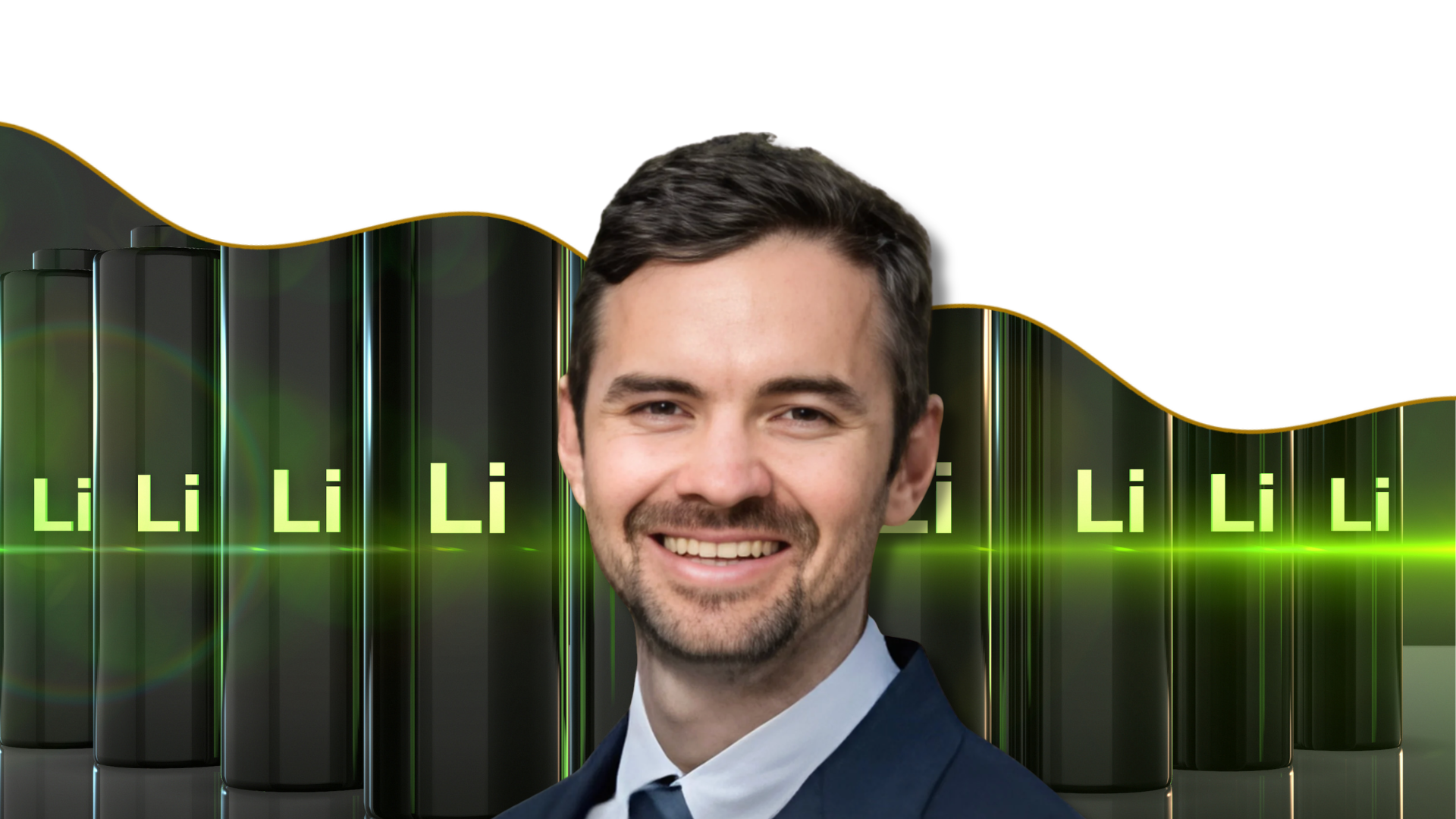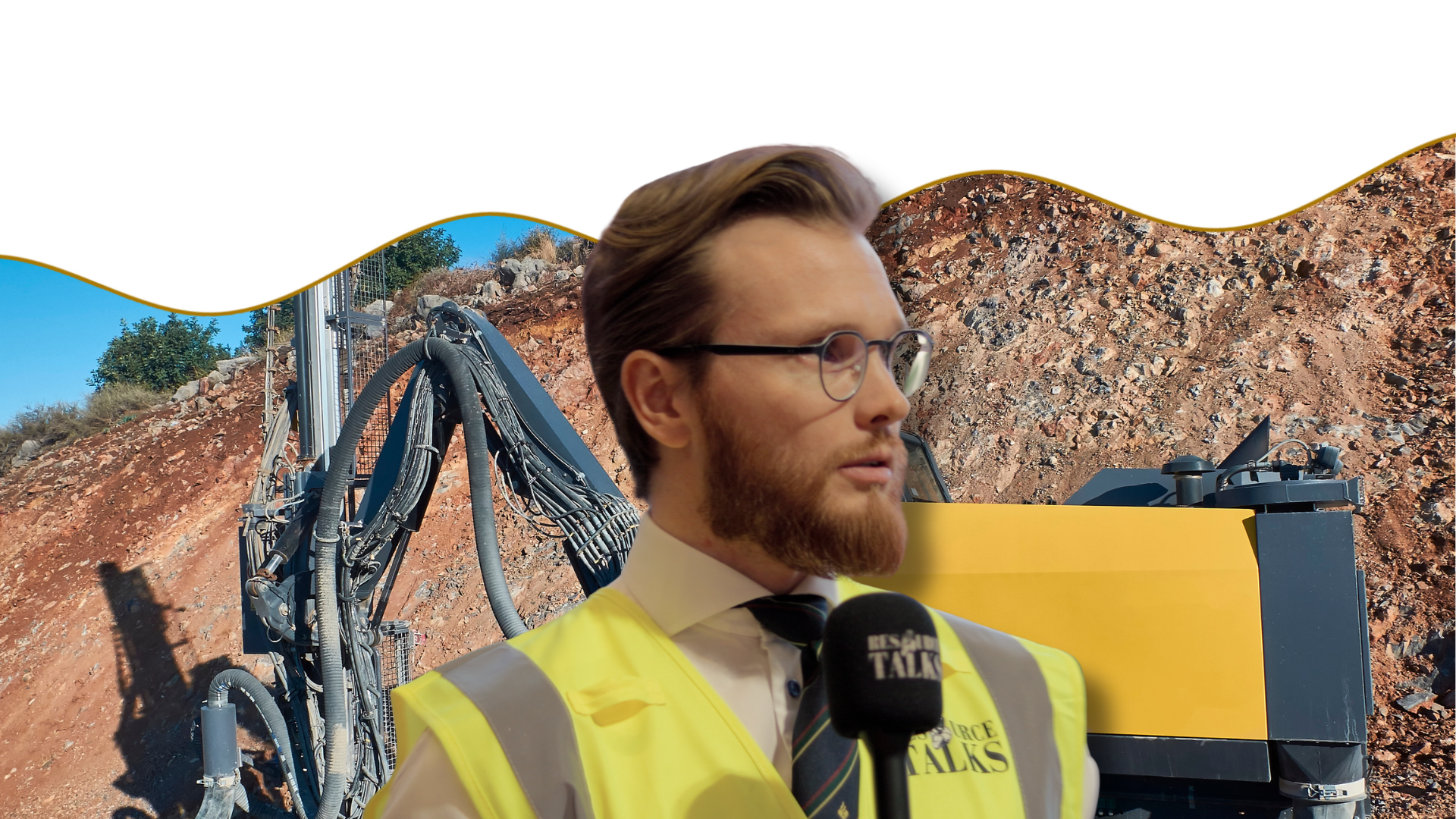

In a time when gold exploration stories are a dime a dozen, Thesis Gold is moving closer to production. Recently, CEO Ewan Webster sat down to walk us through the company’s updated PEA, where the headline number boasted a $1.3 billion after-tax net present value (NPV) at a gold price of $1,930. With a 35% internal rate of return (IRR), a two-year payback period, and a 14-year mine life for the Lawyers and Ranch projects combined, there’s no denying that Thesis Gold is entering a crucial phase of its evolution.
“I think this is a base-case scenario. There’s a ton of potential on this project to continue increasing the mine life and growing the resource base”.
Dr. Ewan Webster, CEO Thesis Gold (TSX-V: TAU)
But behind these numbers lies a complex story of geological, financial, and operational hurdles. Webster delved into the finer details, revealing a company poised at the intersection of potential and challenge.
A Year in the Making: The PEA and Beyond
Webster opened the conversation by emphasizing the scale of what’s been achieved in just one year.
“This is huge for the company. Arguably, it’s better than we were anticipating”, Webster said with a hint of pride. Indeed, the numbers back up his statement, reflecting a year-long effort to combine the Lawyers and Ranch projects into a single cohesive mining operation.
This updated PEA is the culmination of a year of drilling, resource updates, and metallurgical advancements. According to Webster, the company’s vision has come to fruition: “We’ve delivered on time, on budget, and I think this is transformative for the company”.
One key element is the continuity of mineralization across these two projects. Lawyers hosts a low-sulfidation epithermal system, while Ranch has a high-sulfidation epithermal system, two different but complementary geologies. Webster reassured us: “At Lawyers, continuity is not an issue. It’s very predictable, and we’ve been hitting as expected. However, Ranch, with its large structurally controlled system, presents more challenges, though” Webster remains optimistic. “I think Ranch will evolve into something bigger, and the continuity will improve over time”.
Open Pit to Underground: Managing the Transition
One critical aspect of Thesis Gold’s mine plan is the transition from open-pit mining to underground operations—a potential point of concern for investors familiar with the difficulties that can arise during such transitions. Webster, however, dismissed these fears: “The underground mining and open-pit mining will occur in tandem, with underground operations starting as early as year two”.
“This simultaneous approach”, Webster explained, “minimizes disruption and capitalizes on high-grade mineralization earlier in the mine life. The improved stripping ratio, now 4.5:1 compared to the previous 5.9:1, was also a highlight. The base of the pit has come up quite a bit, which reduced the strip ratio, he noted. While still not the lowest ratio in the sector, it is a marked improvement”.
Metallurgy and Recoveries: Fine-Tuning the Details
The conversation shifted to the project’s recoveries, where Thesis is working with a gold recovery rate of 93% and a slightly lower silver recovery of 86.1%. This drop in silver recovery from previous estimates was due to the specifics of the ore processing method. As Webster explained, “The recoveries change a little bit depending on where the ore is coming from and what process it goes through”.
Nevertheless, Webster emphasized that further metallurgical testing would be conducted but expressed confidence that recoveries would remain robust moving into the Pre-Feasibility Study (PFS) phase.
Tailings and Water Management: Navigating Environmental Concerns
In the age of heightened scrutiny on environmental practices, Webster addressed the issue of tailings and waste rock management head-on. Given the challenges being faced by other projects in the Yukon and beyond, Webster noted that Thesis Gold’s topography provides natural advantages.
“The site we’ve selected for tailings can accommodate all the tailings from both projects, with room to spare”, he said.
On water management, Webster pointed out that the Lawyers and Ranch projects are located in subalpine to alpine regions, far from major water bodies or fish-bearing streams.
“We’ve been collecting baseline data for over two years, and we have a fantastic data set to demonstrate the natural baseline conditions”, he said, adding that “the company remains fortunate that the deposit is low in acid-generating sulfides”.
Exploration Upside: More Gold in the Ground?
With the PEA numbers locked in, one question that remains is the exploration upside.
The mine life of 14 years only accounts for a portion of the total resource, and Webster hinted that there’s much more gold to be added. “I think this is a base-case scenario. There’s a ton of potential on this project to continue increasing the mine life and growing the resource base”.
The company’s exploration program is drilling 10,000 meters this year, with 5,000 meters allocated to each project.
However, Webster is cautious about over-investing in exploration during a tough market. “I don’t want to spend $50 to get $10 in return”, he said, acknowledging that the current market environment doesn’t always reward strong drill results. Still, he remains confident that a balance can be struck between de-risking the project and testing new targets.
Financing and Market Realities
Of course, the success of the project hinges on financing, and with Thesis Gold’s current market cap sitting far below the $1.3 billion NPV, Webster knows there’s work to be done. When asked about the use of a 5% discount rate in the PEA—an industry standard but potentially outdated in today’s high-interest-rate environment—Webster pointed to gold prices as a mitigating factor. “At current spot prices, the IRR improves materially to 64%, and the NPV rises to $3.2 billion pre-tax”.
Nevertheless, financing remains a significant question mark, especially given Thesis Gold’s relatively small size compared to the scale of the project. While the company’s balance sheet is solid, with $20 million raised and a 10,000-meter drilling program underway, Webster acknowledged that market conditions would dictate the next steps. “Whether we build this mine or someone else does, that’s a question for the future, he admitted”.
Conclusion: A Path Forward
As Thesis Gold continues to advance the Lawyers and Ranch projects, the updated PEA stands as a major milestone. With strong economics, substantial exploration upside, and a de-risking path laid out for the next few years, the company is in a solid position. However, challenges remain—chiefly around financing and market perception.
Webster remains resolute, confident in the project’s potential: We’ve got a phenomenal economic project that is very viable to build. But as with any major mining endeavor, the true test will come in the execution. Whether Thesis Gold builds the mine itself or finds a partner, the next few years will determine if this potential can be fully realized.
For now, Webster is focused on pushing the project forward, ensuring us that when the time comes, Thesis Gold is ready to capitalize on its billion-dollar opportunity.
Thesis Gold CEO Interview with Ewan Webster
This is a very brief summary of what was a lengthy interview. Don’t rely on this summary. Watch the full interview which is linked above.
Please note that this guest has paid for the creation of this content. The Resource Talks interview rules are simple.
The companies, albeit paying or non-paying, get no questions upfront, no questions off the table, and no editing rights.
The information provided herein is general & impersonal in nature and meant for entertainment purposes only. The reader acknowledges and agrees that the information does not constitute a solicitation of an offer to buy or sell any security or instrument or to participate in any trading strategy. The author is not a licensed investment advisor. He is just another talking head on the internet. He might own shares of companies mentioned in this publication. Always assume he doesn’t know much more than a potato does. The mining & exploration space is among the riskiest sectors to invest in. The risk of anything mentioned in this publication is 100% loss of capital. If you don’t read the official documents provided by the company on http://www.SedarPlus.ca, you will lose all of your money.