
SPONSORED CONTENT ❗
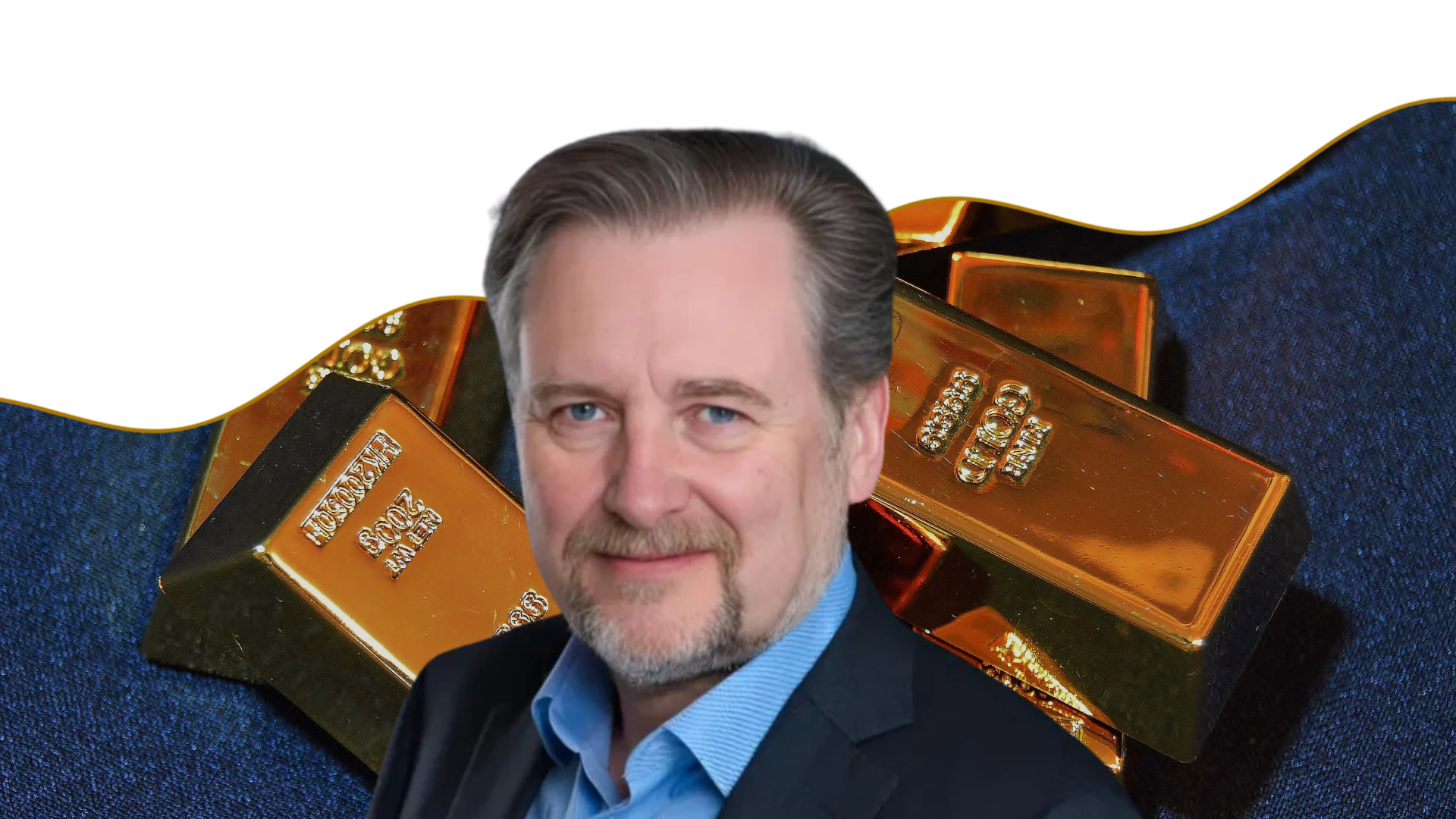
This interview was primarily a macro conversation about Canada’s declining competitiveness in mining and broader extractives, with Stephen Stewart arguing Canada has already fallen behind and framing the root causes as permitting delays/opacity, fragmented decision-making across federal-provincial-municipal-First Nations layers, and underbuilt infrastructure that raises discovery and development costs. The discussion also touched on British Columbia-specific concerns (including property-rights issues and staking/regulatory risk as mentioned), the political economy around pipelines and oil and gas, and how these issues affect where capital flows and why Canada could now be the contrarian jurisdiction.

TLDR;
Stewart’s core point is that Canada’s problem is not geology, it’s time and process risk. Permitting has become a black box that investors cannot price confidently, pushing capital toward faster jurisdictions even when those places carry different forms of political risk. He argues the fix is conceptually simple but operationally hard: streamline permitting, clarify who decides what (including First Nations boundaries/rights as they intersect projects), and invest in infrastructure so projects can be discovered, built, and operated at competitive unit costs. He also suggests BC is still workable for responsible operators but the headline noise and policy uncertainty increase perceived risk, and he repeatedly returns to the idea that if Canada wants living standards and infrastructure to improve, responsible extraction is a practical lever, not a moral debate.
–
- Canada’s competitiveness issue is a governance and permitting bottleneck, not a lack of mineral endowment or technical capability.
— — —
Stewart describes a system where no single party can clearly define the permitting process, timelines, or decision boundaries, because authority is spread across federal thresholds, provincial ownership of minerals, municipal social license, and multiple First Nations potentially overlapping a project area. His claim is that this uncertainty makes projects effectively un-investable for many capital allocators because it cannot be quantified, and that the result is longer timelines that undermine Canada’s ability to compete for capital.
– - Infrastructure is an economic multiplier for exploration and development.
— — —
Historical mining corridors and rail buildout are examples of how access reduces the unit cost of discovery and development and makes remote regions viable. He also argues that much of Canada’s rural prosperity depends on extractives and that the country’s geography (large landmass, concentrated population near the US border) makes infrastructure deficits a structural constraint. The political overlay matters here, too. Stephen links national friction (pipelines, provincial-federal tensions, and broader policy swings) to investor behavior and to increased interest in real assets and commodities when confidence in systems and counterparties erodes.
– - Self-inflicted permitting wounds are real.
— — —
Even competent operators face stakeholder fragmentation risk, where engaging one party does not mean you have engaged all relevant parties. He argues most disputes ultimately resolve into two pragmatic issues: environmental standards and economic participation. However, ideology is sometimes used as a blocker but it’s often masking bargaining over value. He also frames BC as fundamentally a strong mining jurisdiction with a long track record, while acknowledging near-term policy noise and stressing that operators must do early, respectful, consistent engagement and baseline work to avoid avoidable blowups.
OreCap Invest CEO Interview With Stephen Stewart
VERY IMPORTANT WARNING
Please note that OreCap Invest has paid Resource Talks for the creation of this content. This website is a business that charges for the creation and publication of content. This means there will always be a potential conflict of interest which means you can never rely on anything said herein.
By consuming this content, you acknowledge that Resource Talks and/or its affiliates and/or their personnel may own, have owned, or will own interests in and/or may have a business relationship with some or all companies/entities mentioned/featured in this publication. You further acknowledge that entities which may be referenced or featured in this publication or their related parties may hold an interest in Resource Talks or its affiliates, which may create further conflict of interest.
The information provided herein is general & impersonal in nature and meant for entertainment purposes only. The reader acknowledges and agrees that the information does not constitute a solicitation of an offer to buy or sell any security or instrument or to participate in any trading strategy. The author is not a licensed investment advisor. He is just another talking head on the internet. He might own shares of companies mentioned in this publication. Always assume he doesn’t know much more than a potato does. The mining & exploration space is among the riskiest sectors to invest in. The risk of anything mentioned in this publication is 100% loss of capital. If you don’t read the official documents provided by the company on http://www.SedarPlus.ca, you will lose all of your money.