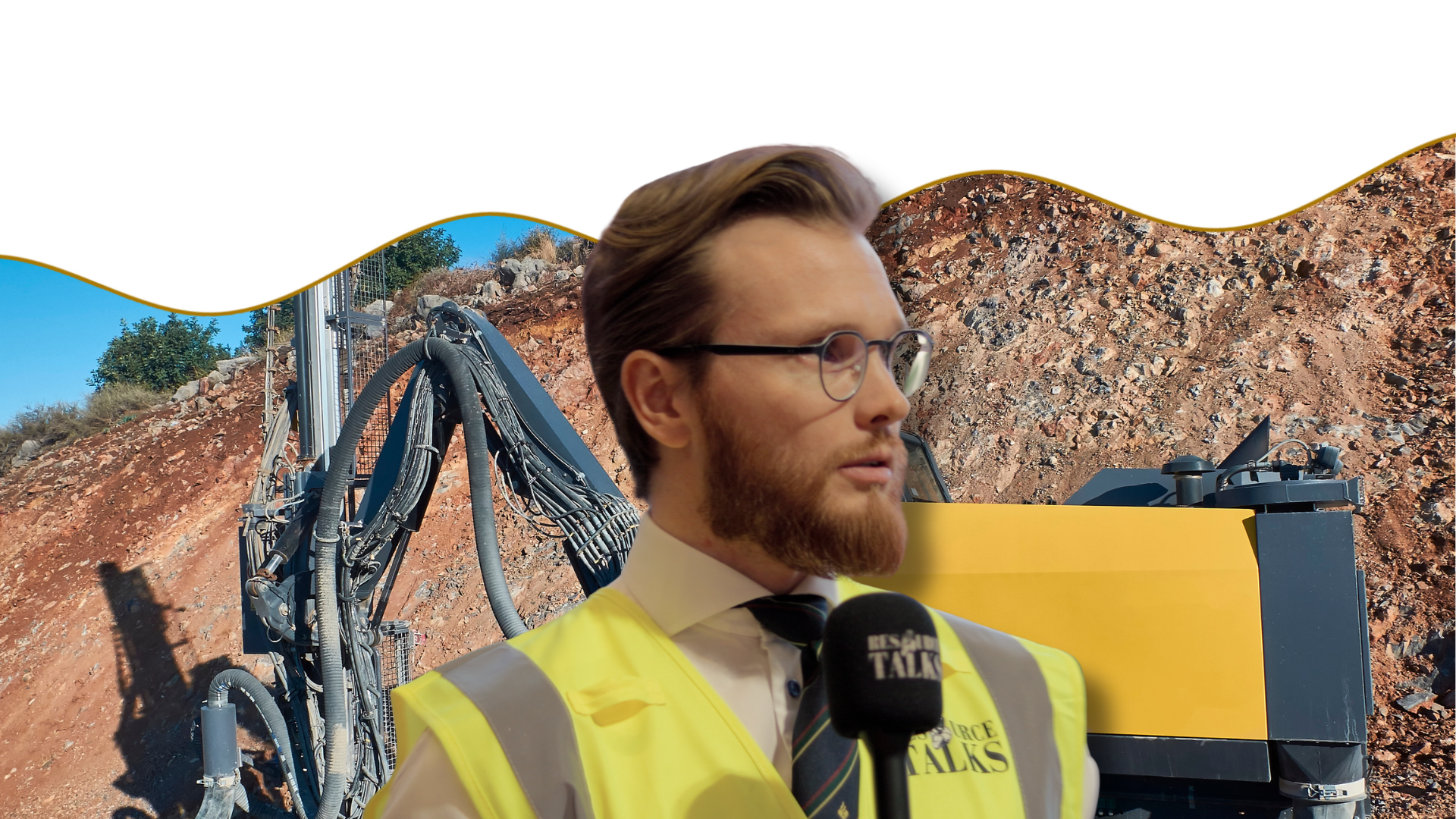

During an in-depth interview, John-Mark Staude provided insights into how his company is navigating mineral exploration in Canada, Mexico, and the United States. Riverside’s unique approach as a hybrid prospect generator and explorer has set it apart from typical junior miners, allowing the company to manage capital efficiently while minimizing dilution to shareholders.
“We’re in a great position with no debt, a strong cash balance, and multiple revenue streams. We’re not in a rush to raise capital, but when we do, it’ll be on our terms.”
John-Mark Staude, CEO Riverside Resources (TSX-V: RRI)
—
Riverside Resources, listed on the TSX Venture Exchange, is a $11.5 million market cap company with approximately 75 million shares outstanding. Insiders, including Staude, own about 10% of the company, with the rest of the shares spread among high-net-worth individuals, resource funds, and institutions like Adrian Day Asset Management and Sprott Global. Riverside’s financial statements reveal $7 million in current assets, mostly cash, with negligible long-term debt, reflecting its conservative fiscal management. However, Riverside faces a potential Mexican tax penalty of $1.4 million, a topic Staude touched on during the discussion.
What is Riverside Resources?
At its core, Riverside is a prospect generator, leveraging partnerships to finance exploration activities while retaining project ownership and building a portfolio of royalties.
Staude explained, “We’ve built our business by minimizing dilution, and we’ve done that by selling our assets and self-financing.” This model has allowed Riverside to maintain a tight share structure with no rollbacks or excessive share issuance since its inception in 2007, an unusual feat for a junior mining company.
Staude’s team has executed over 84 projects across various jurisdictions, with significant attention focused on Ontario, Mexico, and British Columbia. The company’s diverse portfolio includes gold and silver projects, along with a burgeoning interest in rare earth elements (REEs), a pivot that reflects the shifting demand for critical minerals. Staude emphasized that Riverside has stayed agile by retaining royalties on key assets, including the high-grade Los Cuarentas gold-silver project in Mexico, which could provide cash flow in the coming years.
Underperformance
Addressing the perennial question about Riverside’s underperformance since its IPO, Staude was frank: “If you had bought in at the IPO in 2007, you’d be down over 80%. We went through the 2008 financial crisis, and like many others, Riverside took a hit. But we’ve rebounded, and smart money, including guys like Rick Rule and Lucas Lundin, invested above a dollar.”
Despite these challenges, Staude remains optimistic about Riverside’s future. “Right now, our enterprise value is only around $6 million. Given our cash position, lack of debt, and strong partnerships, we see upside potential.” This optimism is bolstered by Riverside’s $5 million cash on hand and its multiple income-generating partnerships with major players like BHP and Fortuna Silver. These partnerships allow Riverside to leverage other companies’ capital while advancing their own projects without diluting shareholders.
Prospect Generation + Exploration in 1?
Staude elaborated on Riverside’s shift toward exploring its own projects, blending the prospect generator model with more traditional exploration activities. “We’re not just looking for partners anymore. We’re drilling our own projects, like the Oakes project in Ontario, where we’ve hit promising high-grade gold.” Still, Riverside continues to prioritize JV deals, securing external funding to advance projects without tapping equity markets.
“Dilution is the enemy in this business,” Staude remarked, reflecting Riverside’s focus on maximizing shareholder value.
Royalties
A key aspect of Riverside’s strategy is its royalty portfolio, which includes several gold and silver royalties in Mexico. These royalties have been generated through Riverside’s projects rather than purchased, making them highly valuable, especially the 2% NSR royalty on the Los Cuarentas project in Sonora. Staude expressed confidence in the long-term value of these royalties, despite recent political shifts in Mexico.
Political Shifts in Mexico
Mexico’s regulatory environment remains a concern, particularly after the government’s introduction of an open-pit mining ban on new titles. However, Staude clarified that this ban does not apply to existing titles like those held by Riverside. “The headlines miss the nuance. This only affects new titles. Our projects, like Los Cuarentas, are on existing titles, so we’re not impacted by these changes.”
Rare Earth Elements
Staude sees the rare earth elements (REE) sector as a major opportunity for Riverside, particularly given the geopolitical importance of securing domestic REE sources outside of China. “Rare earth elements are critical for modern technology, and Canada and the U.S. will need to develop their own sources.” Riverside is currently exploring REE opportunities in British Columbia, focusing on projects that are accessible by infrastructure to reduce costs. Staude hinted at the possibility of spinning out a rare earth-focused company, much like Riverside’s previous spinoffs, providing shareholders with another opportunity to benefit from Riverside’s project generation expertise.
Fortuna Mines Partnership
Staude also discussed Riverside’s partnership with Fortuna, which is currently funding a 2,500-meter drilling program on the high-grade Cecilia project in Mexico. “Each of the three targets we’re drilling could be company-makers,” he said, underscoring Riverside’s focus on high-grade discoveries. Staude acknowledged the market’s appetite for large, high-grade discovery holes, noting that Riverside’s approach balances risk by maintaining a diversified portfolio across different commodities and jurisdictions.
The Ontario Opportunity
In Ontario, Riverside is advancing the high-grade Oakes gold project through its spinoff company, Blue Jay, which Riverside owns a royalty on. “We’re excited about the work we’re doing in Ontario, and we see great potential to generate value there.”
Ultimately, Staude remains committed to Riverside’s long-term strategy of generating value through partnerships, royalty generation, and selective exploration. “We’re in a great position with no debt, a strong cash balance, and multiple revenue streams. We’re not in a rush to raise capital, but when we do, it’ll be on our terms.”
Conclusion
Staude’s measured, strategic approach to mineral exploration stands in stark contrast to many junior miners who dilute shareholders at every turn. For Riverside Resources, the path forward involves continuing to leverage other people’s money (OPM) while maintaining control over its growing portfolio of projects and royalties. As Staude put it, “It’s all about making smart decisions and protecting the downside.”
Riverside’s future looks promising, but as always in the mining business, execution is key. Staude’s pragmatic approach suggests that Riverside has the resilience and strategy to navigate the volatile world of mineral exploration. Whether Riverside can turn its portfolio into tangible value for shareholders remains to be seen, but for now, the company is well-positioned to capitalize on its opportunities.
Riverside Resources CEO Interview
This is a very brief summary of what was a lengthy interview. Don’t rely on this summary. Watch the full interview which is linked above.
Please note that this guest has not paid for the creation of this content. The Resource Talks interview rules are simple.
The companies, albeit paying or non-paying, get no questions upfront, no questions off the table, and no editing rights.
The information provided herein is general & impersonal in nature and meant for entertainment purposes only. The reader acknowledges and agrees that the information does not constitute a solicitation of an offer to buy or sell any security or instrument or to participate in any trading strategy. The author is not a licensed investment advisor. He is just another talking head on the internet. He might own shares of companies mentioned in this publication. Always assume he doesn’t know much more than a potato does. The mining & exploration space is among the riskiest sectors to invest in. The risk of anything mentioned in this publication is 100% loss of capital. If you don’t read the official documents provided by the company on http://www.SedarPlus.ca, you will lose all of your money.