
READ TIME: 10 MINUTES
—
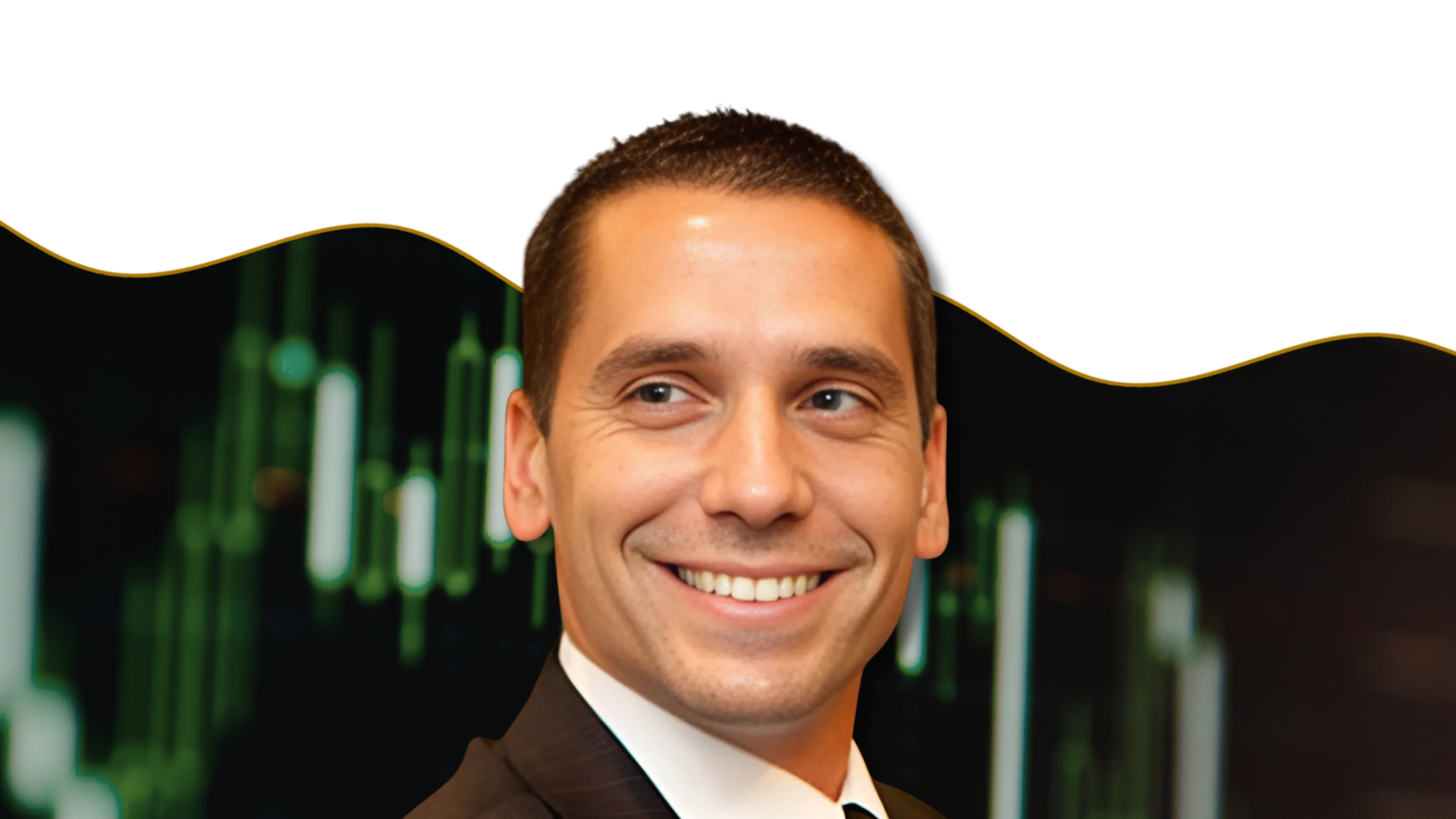
S2 Resources Chairman Mark Bennett covered the company’s structure, strategy, projects, financing, and philosophy with the unfiltered perspective of a seasoned explorationist. The report delivers a rare level of transparency about how a technically competent but under-the-radar ASX junior operates: how it allocates capital, manages risk, navigates land access, and prioritizes exploration across a diverse portfolio. It also revealed Bennett’s pragmatic, almost contrarian approach to discovery—from resisting dilution and avoiding trendy commodities, to the calculated decision-making that underpins each drill program. No hype, just strategy, experience, and a bit of geological gallows humor.
TL;DR
- 1. S2 Resources is managing a wide portfolio of early-stage exploration projects across Australia with a clear focus on geological potential over market trends.
- 2. The company’s low share price reflects thin trading and lack of retail visibility—not necessarily the quality of its targets or team.
- 3. Mark Bennett’s track record and significant personal stake suggest strong alignment, but the exploration model remains high-risk, high-reward.
- 4. Access delays and slow permitting in places like Victoria have forced S2 to maintain multiple irons in the fire to ensure continuous news flow.
- 5. Despite minimal marketing and an under-the-radar profile, the company is preparing for a critical phase with four drill programs planned across major targets.
Who is Mark Bennett, and is he the right man for the job?
Mark Bennett is a PhD-trained economic geologist with a history of high-profile exploration success.
He spent nearly a decade at Western Mining Corporation before joining LionOre, which was taken over by Norilsk Nickel for A$7.5 billion. He later founded Sirius Resources, which discovered the Nova-Bollinger nickel deposit and was acquired by IGO for A$1.8 billion. Following that deal, S2 Resources was spun out as Sirius 2. Despite past successes, Bennett claims he remains motivated by the thrill of discovery, not money. “We just do it because it’s what we love,” he said. “Exploration is intrinsically dumb—99 times out of 100, you’re going to fail.”
What relevant experience does the team bring to this exploration effort?
According to Bennett, S2’s team members have worked in over a dozen countries on five continents, covering mainstream commodities like gold, copper, nickel, and PGEs. They avoid niche, opaque, or logistics-heavy projects, preferring high-margin opportunities in conventional metals. The strategy is to pursue smaller, higher-grade deposits over large, low-grade systems. They avoid high-CAPEX targets such as nickel laterites.
How much skin does Bennett have in the game?
Bennett personally owns between 3.5% and 4% of S2 Resources’ issued shares, with his average cost base around 14 cents per share. The share price currently trades at around 6.5 cents, close to all-time lows. He claims to have bought shares in recent weeks, subject to trading restrictions. He also invests through a family investment company primarily focused on junior resource stocks.
Why has the share price struggled?
The stock has traded between 6 and 14.5 cents over the past year. Bennett attributes volatility to thin retail trading volume and low liquidity, rather than fundamentals. According to him, institutions that received shares via the Sirius spin-out still own a large chunk of the company and are long-term, supportive holders. Retail, by contrast, tends to buy on specific news and sell off quickly if those events disappoint. Bennett claims no long-term debt and says the balance sheet is “clean.”
Who owns the company?
Management holds about 5% of the shares.
Mark Creasy, an influential Australian prospector, owns around 15%. Jupiter Precious Metals Fund (UK) and Paradise Microcap Fund (Australia) are also significant holders, with additional high-net-worth and industry insiders rounding out the top 20. Retail ownership stands at approximately 32%. Bennett emphasized that they avoid generalist funds because they require excessive investor relations time and often misunderstand the exploration business.
Are there any insider royalties?
No. Bennett stated that executive or board-held royalties are uncommon in Australia, in contrast to Canada.
What percentage of Bennett’s time is spent on S2?
Bennett claims to spend 90% of his professional time on S2. He is also non-executive chairman of Falcon Metals, another ASX-listed explorer focused on Victorian gold.
How does S2 prioritize and manage its broad portfolio of assets?
S2 holds a diverse range of projects across Victoria, Western Australia, and New South Wales, and owns a 45% stake in Finnish explorer Sakumpu Resources (Valkea). According to Bennett, having multiple assets is a strategy to offset rising delays and difficulty in securing land access agreements. “Ten years ago, 5% of your time was spent on ground access. Now it’s more like 20%,” he noted. The company prefers to own 100% of its projects to preserve optionality and avoids JVs with majors, which Bennett claims reduce competitive tension.
Would they consider selling assets?
Bennett said divestments are considered on a case-by-case basis. The company structure allows for asset-level transactions because each project sits in its own subsidiary. The spinout of their Finnish assets into Sakumpu (Valkeaa) is one example. A previous non-core gold deposit was also sold for A$9 million to fund the company for 18 months.
Which project would he mortgage his house to drill?
Three contenders were cited: the Fosterville-adjacent project in Victoria, the West Murchison project in WA, and Glenn Logan in NSW. Fosterville is considered geologically the best target but suffers from access restrictions due to farmland and community sensitivities. West Murchison offers virgin terrain with multiple large geochemical anomalies and fewer surface restrictions. Glenn Logan is a porphyry copper-gold target near Cadia that recently returned encouraging distal mineralization.
How is technical and financial focus allocated?
Bennett said budgets are revised four to five times a year depending on results. Drilling is initially tested with aircore or RC before deeper commitments. “You’ve got to be prepared to walk,” he said, citing a previous project in Nevada that was abandoned after drilling cost overruns.
What is happening at Fosterville North (Victoria)?
Drilling is expected to begin imminently on targets identified via IP chargeability anomalies. These anomalies were identified after Agnico Eagle inadvertently released data showing a strong correlation between sulfide presence and gold zones. S2 plans to test these anomalies with aircore initially. The targets lie along strike of mineralized faults at Fosterville and Black Adder, where previous S2 drilling intercepted 5-6m at 6-7 g/t gold.
Could Agnico Eagle be a future buyer or JV partner?
According to Bennett, discussions have occurred but no agreement is in place. Agnico’s future in Victoria is uncertain, contingent on whether it receives approval for additional tailings capacity. S2’s land is considered a logical future source of feed for the Fosterville plant. Bennett suggests a stand-alone development is unlikely due to permitting restrictions.
What defines success in Victoria?
Bennett estimates a viable project in Victoria would require at least 1Moz in reserves at a minimum grade of 5 g/t. He noted that underground gold mining is unforgiving and dilution risk is high. He expects exploration will take two years if access proceeds smoothly.
What is happening at Glenn Logan (NSW)?
Drilling at Glenn Logan is expected to follow Fosterville. The target is a porphyry copper-gold system, 50km from Cadia. An earlier 1,300m drill hole failed to hit the intended magnetic anomaly but returned distal mineralization in the final 300m. New geophysical surveys identified coincident chargeability, resistivity, and conductivity anomalies interpreted as potentially representing mineralized porphyry systems. One hole is planned. Success would be intercepts similar to Ridgeway’s early holes: e.g., 100m at 0.2% Cu and 0.1-0.2 g/t Au. Budget is A$500,000.
What is happening at West Murchison (WA)?
This was a previously discarded package reacquired by S2. To meet permit expenditure requirements, wide-spaced soil sampling was done. Three large anomalies with copper, nickel, chrome, platinum, palladium and gold were returned. These are 6 km long with some 1.5 km coincident zones. RC drilling is planned. Budget is under A$250,000.
What is happening at Warraweena (NSW)?
A 2,600 km2 land package pegged after Geoscience Australia released a national heavy mineral dataset. One sample was 50x more anomalous in sulfides than any other in Australia. S2 JVed with the private holder. The area is entirely concealed by cover and its geology is unknown. Potential models include porphyry copper, magmatic sulfides, IOCGs, or VMS. Drilling will be limited and focused on testing geophysical anomalies to gain geological context. Budget is approximately A$3-4 million over 12 months.
What is happening at Jillewarra (WA)?
S2 has been trying to get tenure granted for four years but has yet to finalize a heritage protocol agreement with traditional owners. The area is on strike with known deposits such as Westgold’s Big Bell and Spartan Resources’ Never Never discovery. Despite being a high geological priority, no work has been completed yet.
What is happening at Koonenberry (NSW)?
The 120 km long belt-scale project is on the backburner. Ground EM is slow and expensive. The project was picked up because of its similarities to the Fraser Range, where Sirius discovered Nova.
What is the current financial position and capital allocation strategy?
As of December 31, 2024, S2 had about A$3.4M in cash and cash equivalents. Based on an estimated burn rate of A$150,000/month for G&A and upcoming exploration programs, the company will likely need to raise capital later this year. Bennett claims S2 will avoid raising large amounts to minimize dilution, noting a 25% placement capacity under ASX rules. The company intends to drill its highest-priority targets first and raise later based on results. Bennett emphasized that capital structure preservation is a key reason long-term shareholders have remained supportive.
What is happening with Valkeaa (Finland)?
S2 owns 45% of Valkeaa, a Finnish explorer focused on a 355 km2 land package in the Central Lapland Greenstone Belt. The stake is not recorded as a current asset, suggesting it is viewed as a long-term investment. Bennett would prefer to maintain ownership but did not rule out using the holding as liquidity if necessary. He did not confirm Valkeaa’s current capital raising intentions.
Why was S2 at PDAC? Will they raise awareness in North America?
Despite presenting at PDAC for over 15 years, Bennett admits that S2 has not gained traction among North American investors. He sees PDAC more as a venue for opportunity sourcing. There are no plans for a Canadian listing. Bennett acknowledged that S2 has consciously avoided active marketing due to its supportive institutional register. However, he said he is reconsidering that approach.
Why isn’t S2 active on social media or engaging investor relations firms?
Bennett claims their investor base doesn’t care about the share price. He said large shareholders tell him: “Just keep doing what you’re doing.” S2 does not employ internal IR staff or retain external IR consultants. He conceded that this has likely contributed to S2’s low profile.
How are salaries and team performance evaluated?
S2’s quarterly G&A is around A$150,000. According to Bennett, the company pays competitive Australian market rates and relies on equity incentives (e.g., options) to align interests. The core team has worked together through four companies. “Culture eats strategy for breakfast,” he said.
S2 Resources Mark Bennett Interview
Please note that although none of the companies mentioned herein have paid Resource Talks for the creation of this content, this website is a business that charges for the creation and publication of content. This means there will always be a potential conflict of interest which means you can never rely on anything said herein.
By consuming this content, you acknowledge that Resource Talks and/or its affiliates and/or their personnel may own, have owned, or will own interests in and/or may have a business relationship with some or all companies/entities mentioned/featured in this publication. You further acknowledge that entities which may be referenced or featured in this publication or their related parties may hold an interest in Resource Talks or its affiliates, which may create further conflict of interest.
The information provided herein is general & impersonal in nature and meant for entertainment purposes only. The reader acknowledges and agrees that the information does not constitute a solicitation of an offer to buy or sell any security or instrument or to participate in any trading strategy. The author is not a licensed investment advisor. He is just another talking head on the internet. He might own shares of companies mentioned in this publication. Always assume he doesn’t know much more than a potato does. The mining & exploration space is among the riskiest sectors to invest in. The risk of anything mentioned in this publication is 100% loss of capital. If you don’t read the official documents provided by the company on http://www.SedarPlus.ca, you will lose all of your money.