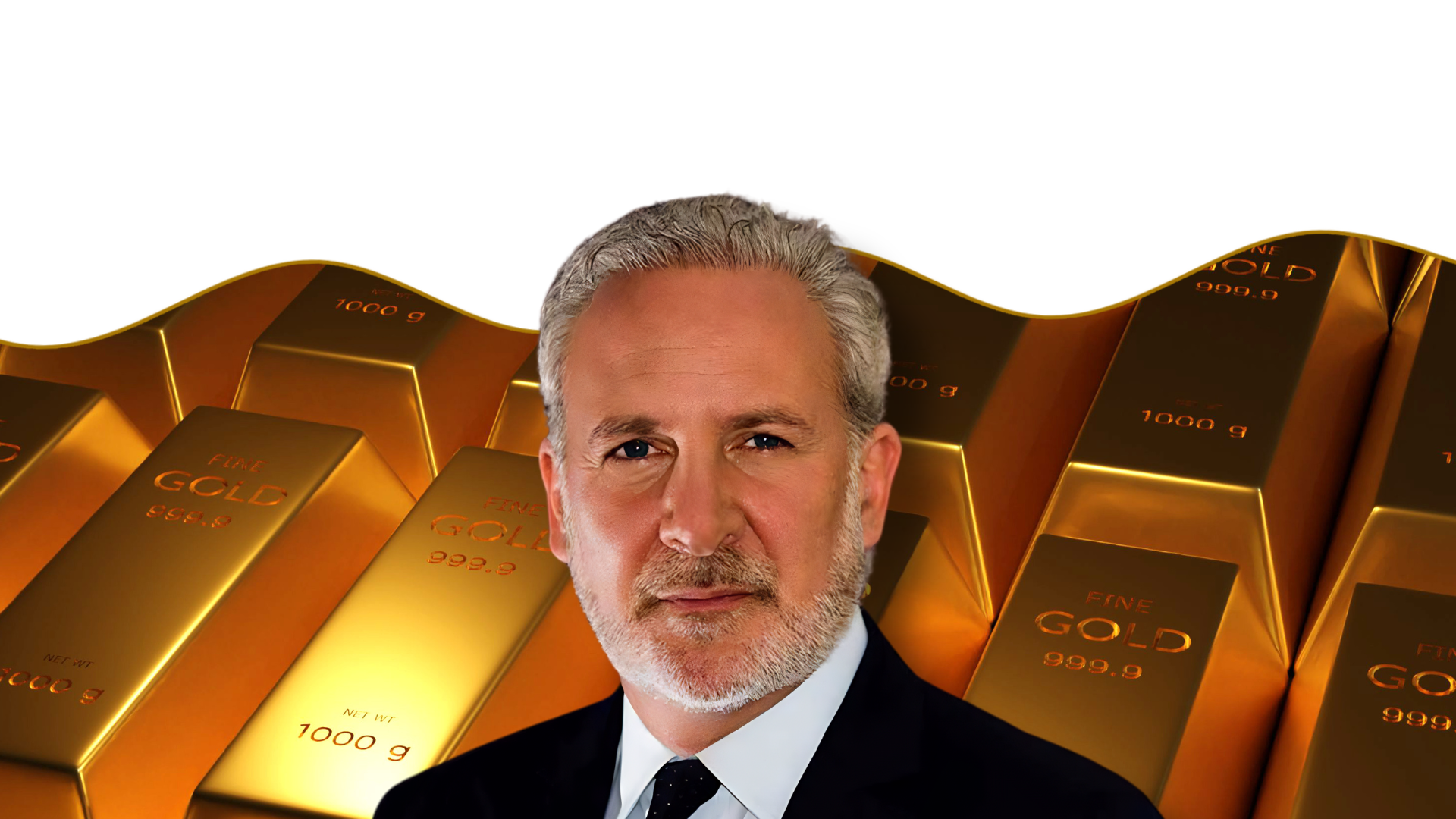

In this interview, Peter Schiff joins host Mark to analyze the April 2026 market environment marked by Middle East disruptions in the Strait of Hormuz, surging German recession risk, and emerging-market central banks selling gold for cash amid an energy shock.

TL;DR
Schiff argues that markets are underestimating the longevity of elevated oil prices due to risk premiums, reserve-building, and limited demand destruction (which hits discretionary spending more than energy itself), while criticizing the Federal Reserve for not hiking rates despite rising inflation driven by money-supply growth rather than input costs. He remains strongly bullish on gold (targeting over $6,000/oz by year-end and potentially far higher long-term) and commodities like copper (recently adding Ivanhoe Mines shares himself) and preferring gold mining stocks over broad equities or bonds. Schiff also voices skepticism about Trump’s Fed nominee Kevin Warsh (praising the institution) and flags potential insider trading around Trump’s policy announcements.
Oil
Peter says oil prices are likely to stay higher for longer than markets expect, favoring energy and broader commodities over cyclical stocks. Schiff believes investors and the oil market are overly optimistic about a quick resolution to the Iran-related disruptions in the Strait of Hormuz, with the U.S. stock market’s new highs reflecting misplaced hopes for falling prices. Even after any peace deal, he sees a sustained risk premium, renewed global demand for strategic reserves (possibly including U.S. replenishment), and structural tightness that will keep oil expensive. Rising energy costs won’t mainly cause “demand destruction” in oil itself as people still need to drive, heat homes, and produce food, but will instead crush discretionary spending elsewhere, creating recessionary pressure rather than pure inflation. In a stagflationary setup, Schiff is leaning into energy and raw materials (including industrial metals like copper, where he just bought Ivanhoe Mines) while reducing exposure to broader cyclical equities, as these commodities will benefit from ongoing needs like AI infrastructure regardless of economic slowdown.
Inflation
Peter reminds us that inflation is fundamentally a monetary phenomenon from central-bank money creation, not input prices like oil. The Fed is too easy and Schiff believes exiting dollars and Treasuries for gold is the right move. He rejects the idea that higher oil or energy costs “cause” inflation, insisting by definition that inflation is expansion of the money supply and credit, and that prices merely respond. He points out that despite the Fed holding nominal rates steady, real rates are actually falling because inflation is running hotter than expected (consumer expectations already at 5% and climbing), making policy easier, not tighter. The Fed should be hiking, not pausing, yet it isn’t, and Schiff is unimpressed with Trump’s nominee Kevin Warsh for immediately praising the institution instead of vowing reform. This environment makes gold and hard assets essential as a hedge, since central banks and investors will increasingly seek protection from eroding purchasing power and sovereign-debt risks.
Gold
The gold bull market remains intact and will accelerate despite temporary central-bank selling. Although some emerging-market central banks (Turkey, Ghana, Russia) are selling gold to fund fuel imports and defend currencies (reducing net buying slightly in 2026) Schiff sees ample new demand from other central banks, private investors, and institutions to absorb it. Gold’s recent 10% pullback from 2026 highs (around $4,800/oz now) was largely profit-taking after a rapid rally anticipating the Iran conflict (“buy the rumor, sell the news”), but the long-term trend is sharply higher. Schiff forecasts over $6,000 by year-end and doesn’t rule out $25,000 or even $50,000+ in a full sovereign-debt crisis. He holds a large position in gold and silver mining stocks (producers, developers, explorers, and royalty companies) across his Euro Pacific Gold Fund (EPGXF, managed by Adrian Day) and personally favors a diversified mix rather than indexing, arguing active selection beats consensus.
Peter Schiff Interview
VERY IMPORTANT WARNING
Please note that none of the companies mentioned/featured herein have paid Resource Talks for the creation of this content. This website is a business that charges for the creation and publication of content. This means there will always be a potential conflict of interest which means you can never rely on anything said herein.
By consuming this content, you acknowledge that Resource Talks and/or its affiliates and/or their personnel may own, have owned, or will own interests in and/or may have a business relationship with some or all companies/entities mentioned/featured in this publication. You further acknowledge that entities which may be referenced or featured in this publication or their related parties may hold an interest in Resource Talks or its affiliates, which may create further conflict of interest.
The information provided herein is general & impersonal in nature and meant for entertainment purposes only. The reader acknowledges and agrees that the information does not constitute a solicitation of an offer to buy or sell any security or instrument or to participate in any trading strategy. The author is not a licensed investment advisor. He is just another talking head on the internet. He might own shares of companies mentioned in this publication. Always assume he doesn’t know much more than a potato does. The mining & exploration space is among the riskiest sectors to invest in. The risk of anything mentioned in this publication is 100% loss of capital. If you don’t read the official documents provided by the company on http://www.SedarPlus.ca, you will lose all of your money.