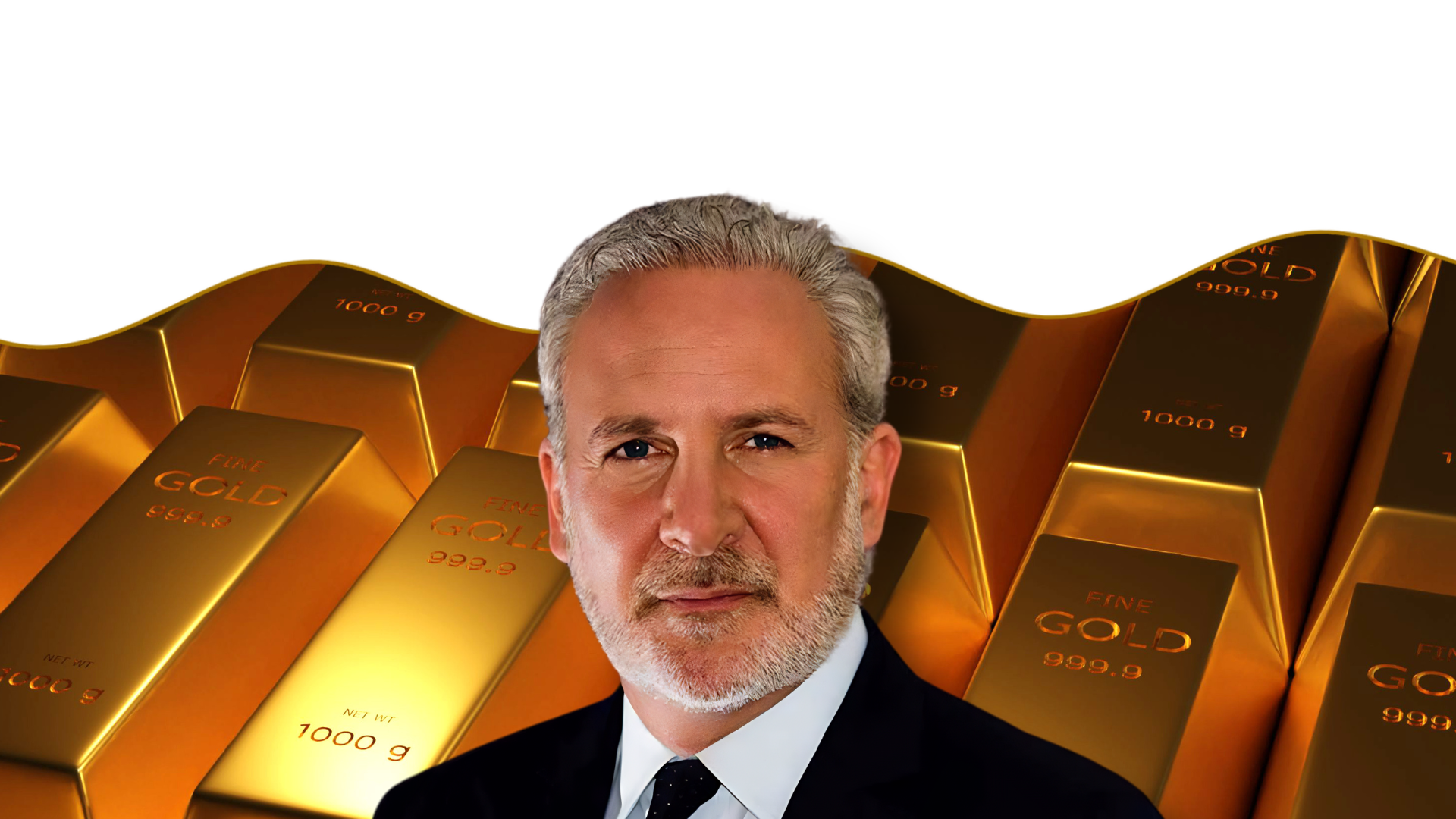

As the world watches Germany’s industrial landscape shift, Tom Luongo dives deep into the confluence of political forces that are shaping the country’s future. Tom discusses the many layers behind Germany’s de-industrialization, Volkswagen’s potential factory closures, and the broader geopolitical ramifications.
We need to reintroduce hard money. Gold-backed bonds are one way to do that. If we raised the price of gold, say to $10,000 an ounce, it would help countries like the US and Germany balance their books.
Tom Luongo, Geopolitical Analyst
Volkswagen’s Factory Closures: A Sign of Political Shift?
The interview begins with Tom’s analysis of a recent headline about Volkswagen considering factory closures in Germany. For many, this news was a shock, signaling the weakening of Germany’s once robust industrial economy. Tom, however, approaches it from a different angle: “It’s not just about economics. Volkswagen’s threat to close factories is a dog whistle for the German industrial class. They’ve had enough of the Green Party’s policies running Germany into the ground, and they want change.”
Germany has been in the throes of a de-industrialization process for some time now. According to Tom, much of this is due to the country’s environmental policies, championed by the Green Party, which has been wielding significant influence since Angela Merkel’s era. “The Green Mafia,” Tom quips, “has neutered German industrial policy.” He points to the shutting down of nuclear power plants and the push for renewable energy sources in a country that’s far from optimal for solar or wind energy.
“Germany’s energy policy is insane,” says Tom. “Solar in Germany? It makes no sense. And now, after years of these decisions, we’re seeing the fallout.”
Political Realignments in Germany: AfD, Green Party, and the CDU
Beyond the economic implications, Tom points out the political shifts happening in Germany, particularly in the eastern states like Saxony and Thuringia, where the AfD (Alternative for Germany) party is gaining ground. These states are strongholds for AfD, a party often branded as far-right, but in reality, according to Tom, represents the populist opposition to the current political establishment.
“Volkswagen’s announcement came right after elections in Saxony and Thuringia. It’s not a coincidence,” Tom says. “The AfD is on the rise, and the CDU (Christian Democratic Union) and SPD (Social Democratic Party) are scrambling to maintain control. The Green Party’s influence is slipping, and the industrial class, represented by giants like Volkswagen, is making its dissatisfaction known.”
The stakes are high for the Green Party. Tom explains that the German political system allows for veto power in the Bundesrat (upper house), and the Greens have been leveraging this power to push their agenda. But with the AfD rising and the Greens losing ground in key states, their ability to block legislation is weakening. “The industrialists are fed up. This is about taking control back from the Greens.”
Economic Fallout: The Cost of Energy and Industry
One of the central issues driving Germany’s de-industrialization is energy. As Tom puts it, “Germany’s decision to decommission nuclear power plants has been a disaster. It’s led to skyrocketing energy costs and left the country vulnerable.” Tom draws a direct line between these policies and the struggles of major companies like Volkswagen and BASF, which are considering moving operations elsewhere.
“Germany is heading for a fiscal and industrial cliff,” Tom warns. “The energy policies championed by the Greens are unsustainable for an industrial powerhouse like Germany. And now, with the rise of the AfD and the backlash from industrialists, we’re seeing the first signs of serious change.”
But it’s not just about energy. Tom also points to the broader European Union (EU) and its impact on Germany’s economy. “The euro is a big part of the problem,” he explains. “Germany is essentially subsidizing the rest of the EU. The country is being bled dry by the Eurozone’s fiscal policies, and the German industrial class knows it.”
The Impact of BRICS and Gold-Backed Bonds
Shifting gears, the conversation turns toward the BRICS nations (Brazil, Russia, India, China, and South Africa) and their growing influence on global economics. Tom sees the rise of BRICS as another challenge for Germany and the broader EU. “BRICS is setting up its own parallel economic system, and it’s something that Europe isn’t prepared to handle. They’re losing their grip on global markets, and BRICS is a big part of that.”
Tom also delves into the idea of gold-backed bonds as a potential solution to some of the world’s fiscal problems. “We need to reintroduce hard money,” he says. “Gold-backed bonds are one way to do that. If we raised the price of gold, say to $10,000 an ounce, it would help countries like the US and Germany balance their books.”
He sees this as a viable solution for the United States, which, despite its debt, has the potential to leverage its gold reserves. “The US holds 8,133.5 tons of gold. At today’s prices, that’s a significant asset. If we allowed the price of gold to rise, it could cover a substantial portion of the national debt.”
The EU, however, is in a much worse position. “The Europeans don’t have the gold reserves that the US does. They’ve sold most of theirs off. If the US moves toward gold-backed bonds, Europe will be left in the dust.”
The Global Shift in Economic Power
In Tom’s view, the world is undergoing a fundamental shift in economic power. The rise of BRICS, the de-industrialization of Germany, and the potential for gold-backed bonds are all part of this larger story.
“We’re heading toward a world where economic power is more decentralized,” Tom explains. “The US will still be a major player, but we’re going to see the rise of regional powers like BRICS. And countries that can’t adapt, like Germany and much of the EU, are going to suffer.”
He also notes that this shift isn’t just about economics—it’s political. “We’re seeing a realignment of global politics. The old alliances are breaking down, and new ones are forming. Countries like Germany that are stuck in the old system are going to struggle.”
The Future of Germany and the EU
Looking ahead, Tom is not optimistic about Germany’s future if it continues on its current path. “Germany is at a crossroads. If they don’t change course, they’re going to continue to de-industrialize, and their economy will suffer. The rise of the AfD is a symptom of this larger problem. People are fed up with the status quo.”
As for the EU, Tom sees even bigger challenges on the horizon. “The EU is on borrowed time. It’s only held together because Germany is footing the bill. If Germany pulls back, the whole thing could come crashing down.”
In the end, Tom’s message is clear: the world is changing, and those who don’t adapt will be left behind. Germany’s de-industrialization is just the beginning of a much larger story.
“There’s a political and economic earthquake coming,” he says. “And Germany is right at the epicenter.”
Tom Luongo Interview
This is a very brief summary of what was a lengthy interview. Don’t rely on this summary. Watch the full interview which is linked above.
Please note that this guest has not paid for the creation of this content. The Resource Talks interview rules are simple.
The companies, albeit paying or non-paying, get no questions upfront, no questions off the table, and no editing rights.
The information provided herein is general & impersonal in nature and meant for entertainment purposes only. The reader acknowledges and agrees that the information does not constitute a solicitation of an offer to buy or sell any security or instrument or to participate in any trading strategy. The author is not a licensed investment advisor. He is just another talking head on the internet. He might own shares of companies mentioned in this publication. Always assume he doesn’t know much more than a potato does. The mining & exploration space is among the riskiest sectors to invest in. The risk of anything mentioned in this publication is 100% loss of capital. If you don’t read the official documents provided by the company on http://www.SedarPlus.ca, you will lose all of your money.