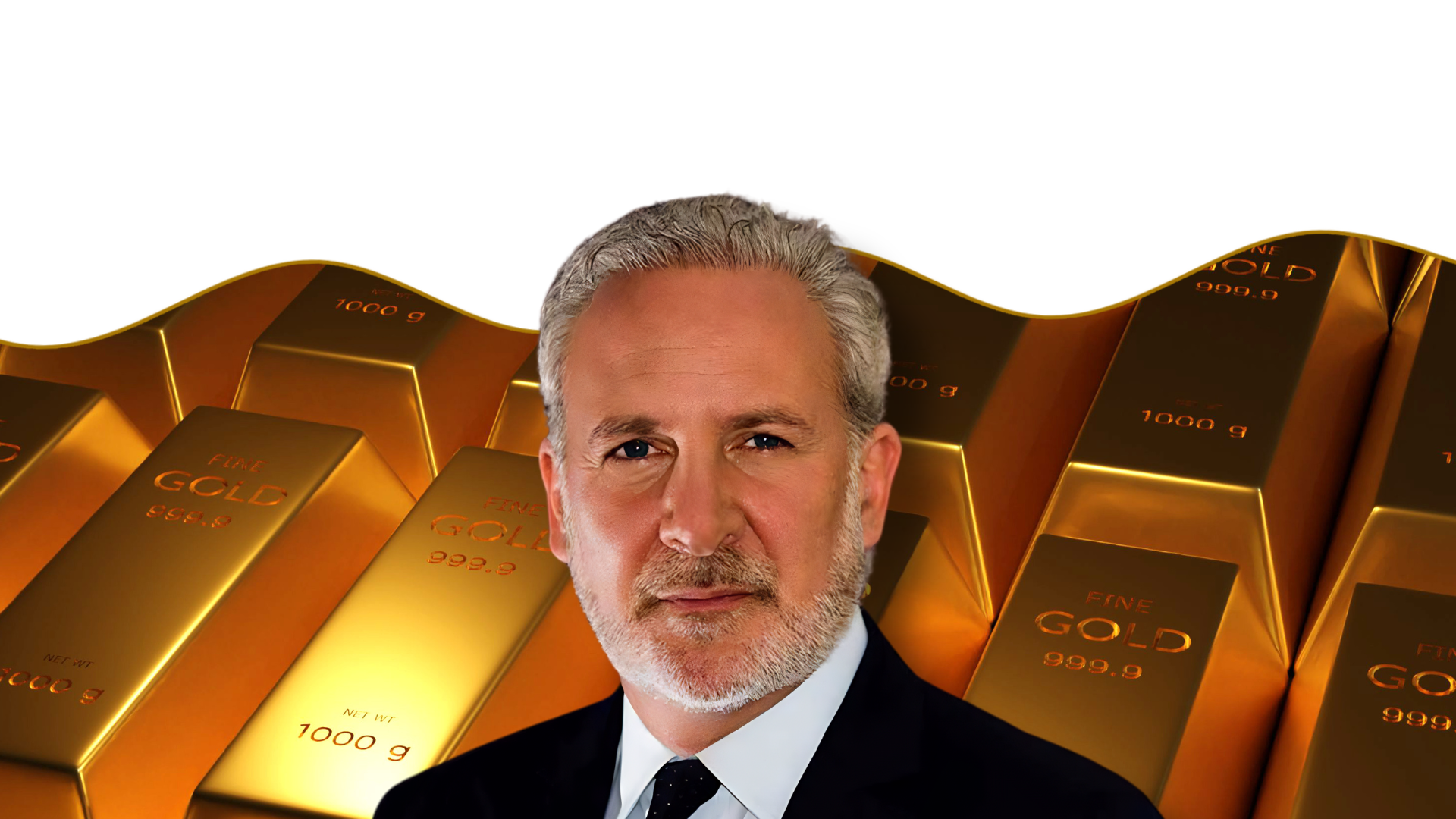

Mark interviewed Steve Hanke, a Johns Hopkins applied economics professor and former Reagan economic adviser across three big interconnected themes: the Iran ceasefire and what it means for energy markets and the Strait of Hormuz, whether a full-blown commodity super cycle is now underway, and how central banks should be thinking about inflation in all of this. At the end Steve was asked to make one portfolio move with $100k.

TL;DR
Hanke says don’t trust the ceasefire, Iran holds all the cards in the Strait, oil prices are headed for another spike when tanker inventories dry up in a few weeks, and Hanke thinks we’re at the beginning of a commodity super cycle that was already in motion before any of this started. He’s bullish on basically everything you can dig out of the ground like critical minerals, oil, gold, silver, and thinks you need to rotate hard out of tech and into commodities. His one portfolio move was to halve the bond position and double the gold exposure.
The ceasefire
Hanke said that if it isn’t written down, it doesn’t exist. He pointed to the pattern with Trump’s tariff agreements, which he says is all handshake theatre, no substance. He went further and argued that Israel, which he says effectively started this war after the February White House meeting with Netanyahu and Mossad chief David Barnea, will simply do whatever it wants regardless of any deal reached in Islamabad. He cited Gaza and Lebanon as examples where ceasefires were broken without consequence. The Strait of Hormuz, in his view, is now permanently on a spectrum somewhere between a toll road and a closed road, and Iran is the one collecting the tolls, now reportedly up to $2 million per tanker, potentially charged in Iranian rials, which have actually appreciated about 11% since the war started. That’s the dark irony he points out: the war that was supposed to weaken Iran has, at least for now, strengthened its currency and brought inflation down from the mid-80s to below 60% annually. He concluded by saying that Iran has the strong hand, end of story.
The physical oil shock
Hanke explained that it takes four to six weeks for a tanker to travel from the Strait to its final destination. That means that by the end of April, all the vessels that left before the war started will have unloaded their cargo. After that, there’s a gap (he called it a physical shortage) that countries like Indonesia, Taiwan, Sri Lanka, and the Philippines, which carry only about 30 days of crude inventory, simply cannot paper over. When those inventories run dry, you get a price spike. Meanwhile, he noted the futures market is already trading well below physical prices, which means the paper market hasn’t caught up yet. In his view, it will. He also flagged that oil infrastructure in Iran has been damaged, wells shut in, and that redevelopment takes time. So he’s long Brent over WTI, and he’s also long oil services companies who’ll be doing all that repair and rebuild work.
The commodity supercycle
Hanke was careful to stress this wasn’t just a war trade. He’d already been calling a commodity super cycle before the conflict. His argument for the supply side is that years of underinvestment mean you can’t just flip a switch and ramp up production. You can’t drill an ore body overnight. That’s not how geology works, and any of us who’ve been around mines long enough know that’s the uncomfortable truth the market keeps forgetting. On gold specifically, he sees the secular bull market peaking at $6,000 to $7,000 an ounce, with silver following on both its monetary and industrial legs (electric vehicle transition being a big driver). Centrally, he noted that France had just repatriated and liquidated its US-held gold this week, a sign that even Western central banks are quietly hedging against the risk of US-administered sanctions freezing their assets. His portfolio move reflected all of this. He dumped $50k of bonds, and bought $50k of gold.
Steve Hanke Interview
VERY IMPORTANT WARNING
Please note that none of the companies mentioned and/or featured herein have paid Resource Talks for the creation of this content. However, this website is a business that charges for the creation and publication of content. This means there will always be a potential conflict of interest which means you can never rely on anything said herein.
By consuming this content, you acknowledge that Resource Talks and/or its affiliates and/or their personnel may own, have owned, or will own interests in and/or may have a business relationship with some or all companies/entities mentioned/featured in this publication. You further acknowledge that entities which may be referenced or featured in this publication or their related parties may hold an interest in Resource Talks or its affiliates, which may create further conflict of interest.
The information provided herein is general & impersonal in nature and meant for entertainment purposes only. The reader acknowledges and agrees that the information does not constitute a solicitation of an offer to buy or sell any security or instrument or to participate in any trading strategy. The author is not a licensed investment advisor. He is just another talking head on the internet. He might own shares of companies mentioned in this publication. Always assume he doesn’t know much more than a potato does. The mining & exploration space is among the riskiest sectors to invest in. The risk of anything mentioned in this publication is 100% loss of capital. If you don’t read the official documents provided by the company on http://www.SedarPlus.ca, you will lose all of your money.