
- Read Time: 8 Minutes
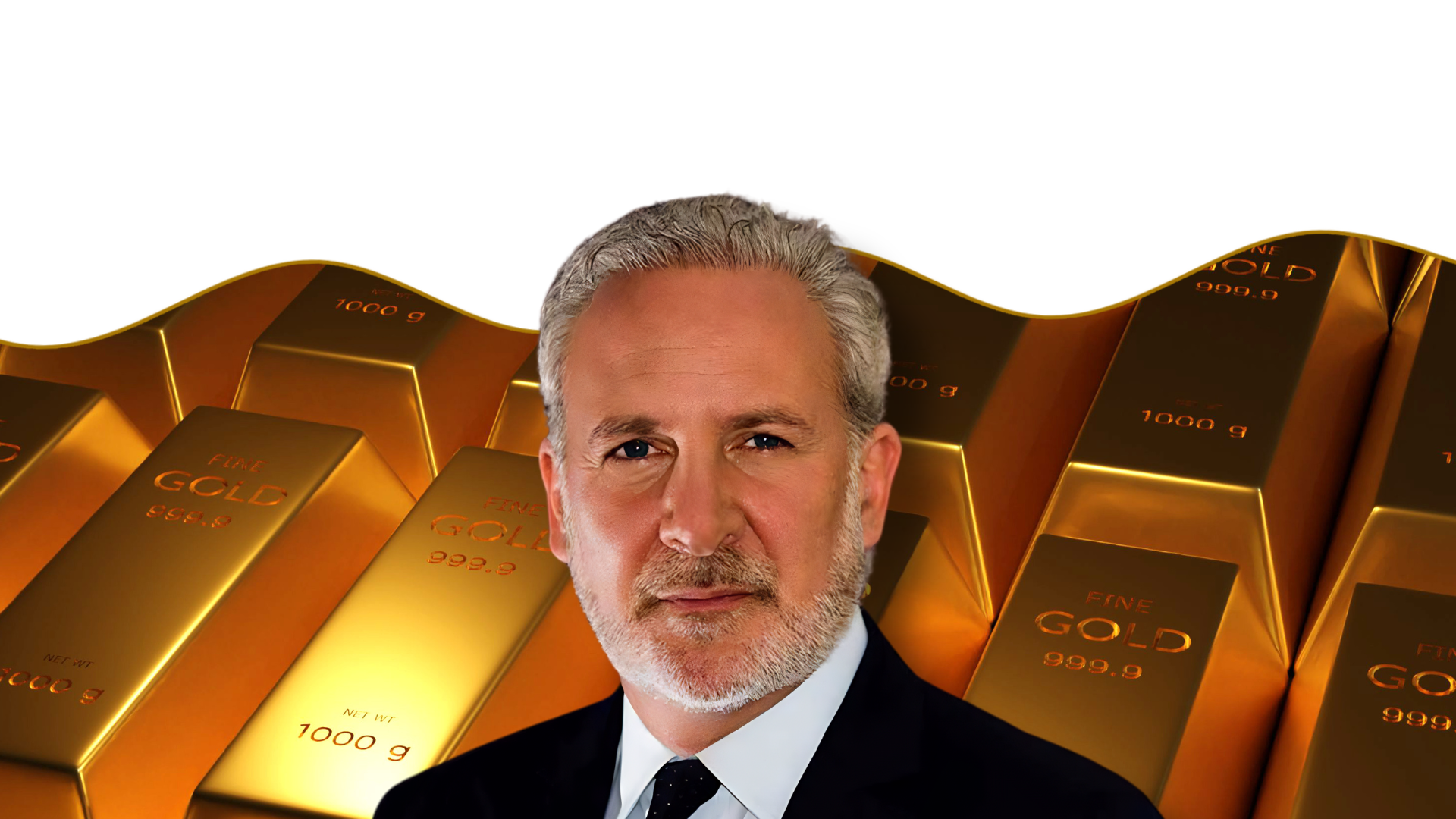
Marc Faber, renowned for his acerbic wit and contrarian views, has earned a reputation as one of the most pessimistic voices in financial markets. Famously dubbed “Dr. Doom,” Faber is no stranger to controversy or criticism, particularly from those who claim he’s been bearish for too long. But Faber has been vindicated in the past, and in this candid interview, he doesn’t hold back in sharing his unflinching assessment of the global economy, government interventions, and where he believes the market is headed.
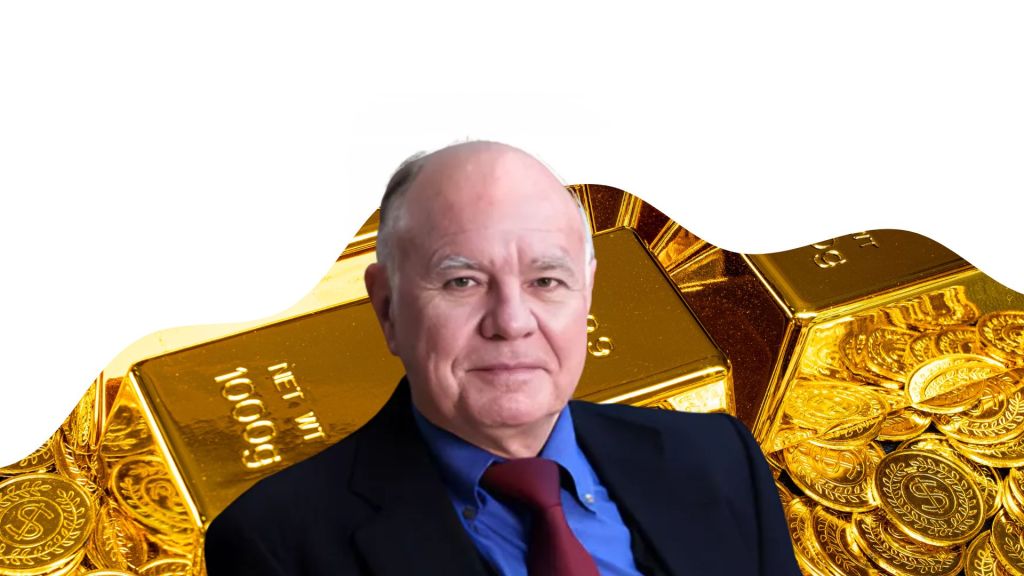
I’ve been called bearish all my life, but I was one of the first to invest in emerging markets in the 1970s and 80s.
Marc Faber, Economist
Faber’s views are far from mainstream. His skepticism of government-reported statistics, his criticism of economic policy, and his steadfast belief in precious metals as a hedge against inflation set him apart from typical market analysts. This interview dives deep into his core beliefs, his outlook on various asset classes, and his personal investment strategy. It’s an unfiltered glimpse into the mind of one of the financial world’s most contrarian thinkers.
GDP Statistics
Faber opens the conversation by challenging the reliability of government-reported GDP statistics. He firmly believes that the global economy has not seen any real growth since 2018. According to him, the figures are distorted by inflation adjustments that fail to reflect the true cost of living increases faced by households. “The government is lying,” Faber says bluntly, “and the GDP figures they publish are meaningless.”
He argues that while governments can inflate asset prices through fiscal deficits and central bank interventions, the underlying economy is weak. Faber points to car sales, individual consumption patterns, and corporate spending as better indicators of economic health than official GDP statistics. By these measures, he believes the global economy is stagnant or shrinking in real terms.
The Average Investor
When asked how the average investor should react to this gloomy outlook, Faber offers some pointed advice. He advises turning off mainstream financial media, which he claims perpetuates the government’s narrative. Instead, he recommends investors take personal responsibility for their decisions, armed with the understanding that official statistics are unreliable. According to Faber, government interventions such as money printing are inevitable, and investors should prepare accordingly.
What is Marc Faber Bullish on?
In a lightning round of asset class assessments, Faber maintains his bullish stance on gold and silver. “Paper currencies will continue to depreciate in value, and the currencies that cannot be printed—like precious metals—will appreciate,” he asserts. However, Faber warns against overloading portfolios with gold and silver, noting that while they are good stores of value, they don’t generate income. Each investor, he says, needs to decide how much exposure they want based on their own financial situation.
On platinum, Faber is similarly bullish, seeing it as a precious metal still trading at depressed levels. He admits he doesn’t know enough about palladium to form a strong opinion but remains generally positive about the broader category of industrial metals.
Turning to energy, Faber reveals a more nuanced view. He believes oil is currently inexpensive and that the world is underestimating future demand for crude. He points to data from commercial traders in the futures market, indicating that professionals in the industry are not heavily short on oil, which suggests they see the current price as relatively low. As Faber puts it, “I prefer to go along on the side of well-informed people.”
When asked about copper and battery metals, Faber takes a measured stance. While he acknowledges the potential for strong demand due to money printing, he cautions that a weak global economy could be a headwind for commodities. He warns that if China remains in recession or experiences slow growth, the demand for copper and other industrial metals may disappoint. “We have two forces working against each other—money printing on one side and weak demand on the other,” Faber explains, making it difficult to predict which will prevail.
Faber also has strong opinions on electric vehicles, which he dismisses as a “complete farce” and “a joke.” He expresses skepticism about the environmental benefits of electric cars, challenging the idea that CO2 emissions are the primary driver of climate change. Instead, he remains committed to traditional energy sources like gasoline and coal, though he admits the market is increasingly moving towards electrification.
On uranium, Faber sees a potential bright spot. He believes geopolitical factors, such as the growing demand for nuclear energy, could drive prices higher. However, he is quick to note that while the fundamentals may be in place for uranium’s rise, he’s more interested in the stock prices of uranium companies than in the price of the commodity itself.
Faber’s view on real estate is similarly nuanced. He argues that while property prices in major financial centers may be overvalued, there are still opportunities in less obvious markets, particularly in Asia. He contrasts the real estate markets in Europe and the U.S. with those in emerging markets, where he believes better value can be found. However, Faber also warns that real estate, like any other asset class, is subject to the same inflationary pressures caused by money printing. In this environment, he argues, owning physical assets that cannot be printed—whether they are metals or land—makes more sense than relying on paper investments.
What is Marc Faber Bearish on?
When it comes to stocks, Faber is decidedly bearish on U.S. equities, particularly the much-hyped “Magnificent Seven” tech companies. “Every Tom, Dick, and Harry is long Nvidia,” Faber says, suggesting that the crowded trade in these high-flying stocks is a red flag. As a contrarian, he prefers to stay away from over-owned stocks and instead looks for opportunities in less popular markets. Faber points to Canada’s mining-heavy stock exchanges as an example of where contrarian investors might find value, though he admits that mining stocks have been underperforming relative to physical metals.
Despite owning some mining stocks, Faber remains cautious about the sector. “Mining stocks are acting horribly,” he says, adding that they’ve struggled to gain momentum even as commodity prices have risen. He remains committed to owning physical precious metals over mining equities, noting that while the stocks may eventually rise, they have yet to deliver the returns he expects.
Why is he Always so Bearish?
Faber is no stranger to criticism, and the conversation turns to those who claim he’s been too bearish for too long. He responds with a mix of humility and defiance. “I’ve been called bearish all my life, but I was one of the first to invest in emerging markets in the 1970s and 80s,” he recalls. Faber lists his early investments in Taiwan, South Korea, and Latin America as proof that he’s not always been a doom-and-gloom investor. “I’ve had the best performance at Barron’s Roundtable for 10 years straight,” he adds, pointing to his long track record of success.
Faber also takes aim at the idea that government agencies like the SEC are there to protect small investors. In his view, these institutions are designed to protect Wall Street, not Main Street. “The stock market is a mechanism that transfers money from people who don’t know what they’re doing to the big boys,” Faber quips, reinforcing his belief that the system is rigged against the average investor.
Conclusion
Throughout the interview, Faber’s disdain for government intervention and money printing is palpable. He sees the erosion of personal freedom and the rise of socialism as existential threats to both markets and individual liberty. Despite his bearish outlook, Faber finds solace in the fact that inefficient governments can create opportunities for those who are prepared to take advantage of their failures. But he warns that in a world where governments have increasingly become “efficient at collecting taxes and expropriating wealth,” the stakes are higher than ever.
For Faber, the road ahead is fraught with risks—political, economic, and financial. But for those willing to navigate the uncertainty, there are still opportunities to be had. Whether it’s in gold, undervalued emerging markets, or physical assets, Faber believes that the key to surviving and thriving in today’s environment is to remain skeptical, stay nimble, and always think for yourself.
Marc Faber Full Interview
This is a very brief summary of what was a lengthy interview. Don’t rely on this summary. Watch the full interview which is linked above.
Please note that this guest has not paid for the creation of this content. The Resource Talks interview rules are simple.
The companies, albeit paying or non-paying, get no questions upfront, no questions off the table, and no editing rights.
The information provided herein is general & impersonal in nature and meant for entertainment purposes only. The reader acknowledges and agrees that the information does not constitute a solicitation of an offer to buy or sell any security or instrument or to participate in any trading strategy. The author is not a licensed investment advisor. He is just another talking head on the internet. He might own shares of companies mentioned in this publication. Always assume he doesn’t know much more than a potato does. The mining & exploration space is among the riskiest sectors to invest in. The risk of anything mentioned in this publication is 100% loss of capital. If you don’t read the official documents provided by the company on http://www.SedarPlus.ca, you will lose all of your money.