
READ TIME: 10 MINUTES
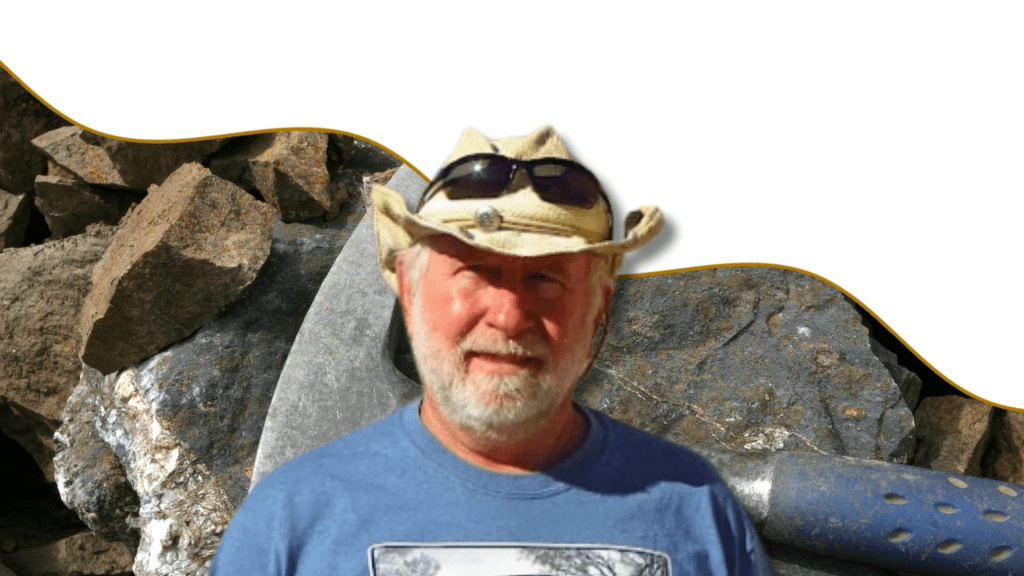
Brent Cook, an economic geologist with decades of experience, discusses the realities of investing in mineral exploration and junior mining stocks. This conversation is a detailed look at the geological, financial, and strategic factors that drive success—or failure—in the sector. Cook offers a frank, unsentimental assessment of what investors should look for in pre- and post-discovery companies, how to recognize overhyped projects, and when to walk away.
TL;DR
- – Expertise matters – Speculators without a technical background in geology or mining engineering should seek knowledgeable sources and/or improve their knowledge and understanding of geological factors such as; drill results, metallurgy, continuity, etc.
- – One hole is not a deposit – A single high-grade intercept does not confirm a viable resource; confirmation drilling, continuity, geometry, structure, and many other factors that may be adding to the economics of the deposit must be considered before committing capital.
- – Management is as important as the rocks – A strong, experienced team with a track record of success is essential, as poor leadership can mismanage even the best discoveries.
- – Promotional hype is a red flag – Companies that rely on excessive marketing, vague data, or misleading comparisons should be approached with skepticism.
- – Know when to sell – Once a project moves into technical studies and dilution increases, the risk-reward profile changes, and unless there is a clear path to acquisition, it may be time to exit.
What Are the Core Strategies for Speculating in Mining Stocks?
Cook emphasizes that investment strategy depends on an individual’s expertise, time, and resources.
“Unless you’re a geologist or mining engineer, you need help in both pre- and post-discovery. Someone who understands the technical side—arsenic issues, metallurgical challenges, grade continuity—is essential.”
Mining is a specialized field, and Cook stresses the importance of consulting reliable sources before making financial decisions.
How Do You Identify a Discovery That Has Real Potential?
A single drill hole does not make a deposit. Cook recalls Mariana Resources, a company that announced a significant discovery in Turkey.
“They drilled a fantastic hole, and the stock doubled. My concern was whether they drilled down the structure. I waited for a scissor hole to confirm width before jumping in. In the end, we made eight to ten times our money because we recognized continuity, size, and strike.”
Cook underscores the need for confirmation drilling and continuity before committing capital because initial drill results, even if impressive, do not necessarily indicate an economically viable deposit.
A single high-grade intercept can be misleading if it lacks geological context—true value lies in continuity, scale, and consistency across multiple drill holes. Without follow-up drilling to confirm width, depth, and strike extent, a discovery remains speculative. Many deposits have appeared promising based on one or two holes but ultimately failed to demonstrate sufficient tonnage, grade distribution, or geological predictability to justify investment.
Brent Cook’s approach is to wait for additional drilling that verifies a coherent and continuous mineralized system before increasing exposure, reducing the risk of being caught in early-stage market speculation that often collapses when reality does not match initial hype.
How Should Speculators Respond to Early Concerns About a Discovery?
Skepticism follows any new discovery. Cook suggests to gather intelligence beyond company press releases.
“Call the geologists, get photos, look at the rocks. Often, mistakes come from misinterpreting previous work.”
He recounts an example from Turkey where geologists mistakenly drilled into transported soil anomalies, nearly leading to a false discovery:
Geologists had identified high copper values in soil samples, leading them to believe they had found a promising target. However, what they failed to recognize was that these anomalies were not in-situ but had been transported from an old Russian mine located upstream. The mineralization they detected in the soil had been relocated by natural processes rather than indicating the presence of a new ore body beneath the sampled area.
This misinterpretation could have led to a misleading discovery claim and wasted drilling efforts. The case highlights the importance of understanding the geological context of sampling results and verifying targets through multiple lines of evidence before committing significant resources to a drilling campaign.
How Important Is the Team Behind a Discovery?
Management is as critical as the rocks themselves.
“If a team has a history of running juniors that mislead investors or over-promise, I won’t touch it. The key in this high-risk sector is simple: don’t lose money.”
Brent acknowledges that every great geologist starts somewhere, citing Snowline Gold as an example where an unknown but skilled geologist made a significant discovery, proving expertise matters more than reputation.
What Comes After Grade, Width, and Depth?
Once a discovery is confirmed, Cook shifts focus to capital structure and financing.
“If a company with a $4M market cap jumps to $15M and then raises another $10M, that’s a 30% dilution.”
Cook also considers metallurgy, deposit continuity, and drilling costs—especially for deep or structurally complex deposits—because these factors directly impact a project’s economic viability. Metallurgy determines how efficiently minerals can be extracted, which can make or break a deposit regardless of grade. Continuity is critical, as erratic mineralization or widely spaced high-grade intervals can render a project uneconomic.
Drilling costs, particularly for deep or complex structures, can escalate quickly, requiring significantly more capital to prove up a resource. Projects that demand extensive drilling to define an orebody often face higher dilution and financing risks, making them less attractive for investors and potential acquirers.
How Do You Recognize When a Stock Is Overvalued?
Determining fair valuation is difficult, but Cook relies on experience and comparisons.
“Something like Southern Cross Gold has an 800M market cap, but it’s a unique deposit that a major will likely acquire. Most juniors don’t justify that kind of premium.”
Cook relies on experience and direct comparisons with past acquisitions and similar deposits to gauge whether a company is overvalued or trading at a reasonable price. He examines resource size, grade, continuity, jurisdiction, metallurgy, and infrastructure alongside market conditions to determine whether a junior’s valuation is justified. While some unique discoveries may warrant high market caps due to acquisition potential, most juniors do not justify extreme premiums unless they have a proven, high-quality resource with clear economic viability.
What Makes a Discovery Attractive for Acquisition?
For a project to appeal to a major mining company, Cook looks at continuity, grade, location, and management’s ability to negotiate.
“A five-year geologist is not the person to negotiate with Newmont or Kinross. You need experienced dealmakers.”
Some discoveries—like Great Bear—were acquired without a resource estimate because of their geological quality, demonstrating that strong geology, continuity, and scale can sometimes outweigh formal economic studies in the eyes of major mining companies.
In Great Bear’s case, extensive drilling showed consistent high-grade mineralization with clear expansion potential, convincing Kinross to acquire the project before a formal resource was established. This underscores the importance of understanding the geological fundamentals of a deposit, as high-quality discoveries with strong continuity and favorable metallurgy can attract significant interest even in the absence of a completed economic assessment.
Should You Invest in Projects Near Existing Discoveries?
While proximity to a discovery can be appealing, Cook warns against assuming it adds value.
“I own both Rupert and Orion because I see synergies. But many of these next-door plays are a stretch. Just because a company claims to be ‘on-trend’ doesn’t mean they have anything.”
Geology does not adhere to property boundaries. Just because one company has made a discovery does not mean adjacent land holds the same potential, especially without supporting geological evidence. Many speculative plays rely on proximity alone, lacking meaningful drill results or structural continuity with the known deposit.
Speculators should critically assess whether an “on-trend” project actually shares the same mineralizing system or if it’s merely riding the excitement of a nearby discovery.
When Is the Right Time to Exit a Position?
Cook looks at metallurgy, capex, and infrastructure to determine when to sell.
“Once a project moves into technical studies, dilution increases, news flow slows, and risk rises. Unless I believe a major will buy it, I’m out.”
High capital expenditures (capex) required for mine development can lead to excessive dilution, making the project less attractive to investors. Infrastructure—such as roads, power access, and water availability—plays a critical role in whether a mine can be economically developed. If any of these factors indicate significant challenges or excessive costs, Cook sees it as a signal to exit before the market adjusts accordingly.
He points to Novo Resources as an example:
“It ran from under $1 to $10, but when I saw it was nuggety with an increasing strip ratio, I sold. That was the right call.”
How Do You Avoid Falling for Promotional Hype?
Cook warns speculators to be wary of aggressive marketing.
“If a website has a bald eagle or the Statue of Liberty, run. If they don’t provide previous work or drill results, that’s a red flag.”
Checking past results helps speculators avoid companies that recycle old high-grade holes while ignoring past failures, a common tactic used to create the illusion of success.
Some junior mining companies selectively highlight exceptional drill results from previous exploration campaigns while omitting low-grade or barren holes that failed to demonstrate continuity. This practice can mislead speculators into believing a project is more promising than it truly is. By carefully reviewing historical drill programs speculators can assess whether a company is genuinely advancing a project or simply repackaging old data to attract new capital.
What About Pre-Discovery Investing?
Cook lays out some basic valuation checks for pre-discovery stocks:
“If a company has $3M in the bank and a $10M market cap, that’s reasonable. If it’s $3M cash and a $30M market cap, they better have an incredible target.”
Brent avoids companies with high valuations unsupported by drill results or compelling geological evidence.
Certain deposit types—such as deep nickel or small-scale VMS—are unattractive to him unless there’s compelling evidence of scale.
What’s the Next Big Mining Jurisdiction?
“The Andes are always promising. Nevada has been surprising, with large-scale discoveries like AngloGold’s Silicon deposit.”
Cook believes Bolivia and Argentina may offer new opportunities as both countries show signs of opening up to foreign investment and modern exploration techniques, despite historical political risks.
Bolivia, long known for its rich mineral potential, has seen gradual improvements in mining policies, while Argentina’s geological prospectivity and evolving regulatory framework make it increasingly attractive for exploration.
However, Cook remains skeptical about Kazakhstan, citing concerns over political stability, transparency, and potential difficulties in securing long-term asset security. While the country has significant mineral resources, the risks associated with government involvement and legal uncertainties make it a less compelling frontier for investment.
Trust the Rocks, Not the Story
Cook’s investment approach is rooted in hard geological data.
“People will lie to you. Rocks won’t.”
Focus on the fundamental characteristics of a deposit rather than market sentiment or promotional narratives.
Brent evaluates projects based on drill results, grade continuity, metallurgy, and structural controls, ensuring that any investment is backed by verifiable evidence rather than speculation. This disciplined approach helps him avoid common pitfalls in junior mining, where companies often rely on hype and selective data presentation to attract investors. By prioritizing geological reality over optimism, Cook minimizes risk and makes informed decisions based on tangible technical assessments rather than hope or market trends.
Brent Cook Interview
Please note that nobody has paid us for the creation of this content. However, this website is a business that charges for the creation and publication of content. This means there will always be a potential conflict of interest which means you can never rely on anything said herein.
By consuming this content, you acknowledge that Resource Talks and/or its affiliates and/or their personnel may own, have owned, or will own interests in and/or may have a business relationship with some or all companies/entities mentioned/featured in this publication. You further acknowledge that entities which may be referenced or featured in this publication or their related parties may hold an interest in Resource Talks or its affiliates, which may create further conflict of interest.
The information provided herein is general & impersonal in nature and meant for entertainment purposes only. The reader acknowledges and agrees that the information does not constitute a solicitation of an offer to buy or sell any security or instrument or to participate in any trading strategy. The author is not a licensed investment advisor. He is just another talking head on the internet. He might own shares of companies mentioned in this publication. Always assume he doesn’t know much more than a potato does. The mining & exploration space is among the riskiest sectors to invest in. The risk of anything mentioned in this publication is 100% loss of capital. If you don’t read the official documents provided by the company on http://www.SedarPlus.ca, you will lose all of your money.