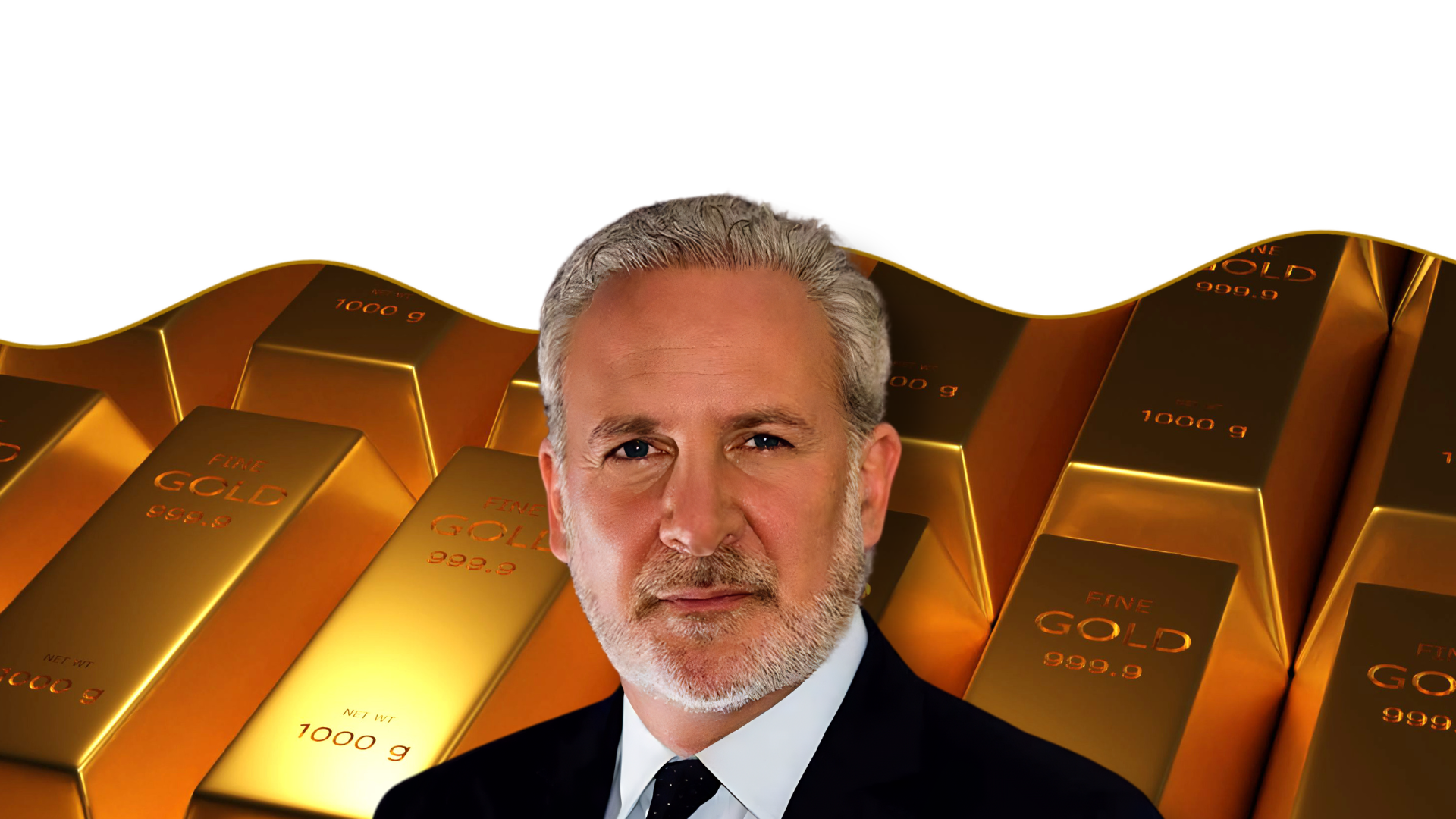


“Gold stock traders don’t trust the rally, they’ve been waiting for a shoe to drop, expecting gold to crash.”
Peter Schiff
5 Key Takeaways
- Gold’s Rally Divides the Market: Despite crossing $2,500, many investors remain cautious. Miners’ stocks lag behind, with skepticism around whether the rally can sustain or will face a correction.
- Inflation Crunch on Mining: Even with rising gold prices, increasing operational costs, including labor and energy, are squeezing profit margins for miners compared to previous highs in 2011.
- The Coming Consolidation: With no major discoveries in the last two decades, large miners may opt for acquisitions over exploration, driving a wave of consolidation across the industry.
- Smart Money Moves to Gold: Central banks, particularly in emerging markets, are buying gold steadily, contrasting retail investors who are pulling out of ETFs. This highlights a deeper confidence in gold’s long-term value.
- Risks Ahead: Liquidity events and dilution loom large, particularly for smaller miners. This makes choosing between physical gold and mining stocks a crucial decision for investors looking to hedge risk.
—
Who is Peter Schiff?
Peter Schiff, CEO of Euro Pacific Capital, is a veteran in financial markets and a well-known advocate for gold investment. His Euro Pacific Gold Fund is heavily weighted towards mining stocks, focusing on the future potential of rising gold prices and consolidation within the mining sector.
Schiff’s strategy revolves around the idea that ongoing monetary expansion by central banks, particularly since the 2008 financial crisis, will lead to inflation and a long-term depreciation of the US dollar. This makes gold a hedge not only against inflation but also against systemic financial instability. His fund, known for targeting smaller mining firms with promising undeveloped assets, anticipates that these companies will be attractive buyout targets for larger players in the near future.
As of late 2024, Schiff’s gold fund has benefited from the recent surge in gold prices, hitting $2,500 an ounce. His investment approach has proven prescient, as central banks have bolstered gold reserves, particularly in countries like China and India, while skepticism in broader financial markets persists.
Gold’s Price Surge: Can It Be Sustained?
The gold market has seen a remarkable rally, breaking past $2,500 per ounce. However, this surge has not been mirrored by a corresponding rise in mining stock prices, which have largely lagged behind. According to Schiff, this hesitation stems from a broader distrust of the rally, with many traders still waiting for a correction.
“Gold stock traders don’t trust the rally,” Schiff explains. “They’ve been waiting for a shoe to drop, expecting gold to crash.”
This skepticism contrasts with the market behavior during the early 2000s, when gold moved from under $300 to $1,900 over a decade. At that time, mining stocks rallied in tandem with the metal. Schiff suggests that the divergence we see today is indicative of early-stage bull markets, where broader investor confidence is yet to catch up with gold’s performance.
However, some analysts believe the current rally could be overextended. Maybe the miners’ lag behind gold prices could be signaling that the surge is temporary. Maybe the fundamentals in the mining sector don’t fully align with a sustainable rise at this pace.
While traders remain cautious, Schiff points to a larger shift in market sentiment that is yet to take place. He suggests that as gold continues to rise, lagging mining stocks will eventually catch up, creating a delayed but potentially substantial boost for mining shares.
—
The Inflation Squeeze on Mining Companies
Despite gold’s record high prices, the industry is grappling with significant cost increases. Rising labor costs, energy prices, and overall inflation have put pressure on miners’ profit margins. Schiff highlights this issue, noting that while the price of gold has climbed, it hasn’t necessarily translated into higher profitability for many companies.
“Even at $2,500, miners aren’t making as much money as they did at $1,900 back in 2011,” Schiff said. “Inflation has squeezed their margins, and they need gold to go higher to remain profitable.”
Data from the World Gold Council confirms this trend, showing that the all-in sustaining costs (AISC) for gold mining have risen by 25% over the last decade. With operational costs climbing steadily, even high gold prices are not enough to offset the cost inflation, squeezing margins for large and small miners alike.
In 2023, the average AISC for mining an ounce of gold rose to $1,250, compared to $900 a decade ago, signaling that inflation in the mining sector is a critical issue, particularly for smaller operators with tighter margins.
—
The Dearth of New Discoveries and Industry Consolidation
The gold mining industry has seen a significant reduction in major new discoveries over the last two decades. As a result, many industry insiders, including Schiff, predict a wave of consolidation rather than new exploration. Larger mining companies with stronger balance sheets are likely to acquire smaller firms with undeveloped resources, rather than investing heavily in exploration projects themselves.
“There haven’t been any major discoveries in the last 10 to 20 years,” Schiff claimed. “The big players like Barrick and Newmont will just buy those reserves on the stock market.”
This trend of mergers and acquisitions is expected to define the next phase of the industry. Larger miners are likely to use their rising stock prices and cash reserves to acquire smaller firms with high-potential deposits, fueling a new wave of industry consolidation.
Although it is worth noting that many exploration CEOs take a more optimistic view. Consolidation may dominate, but exploration isn’t dead yet.
While Schiff’s focus is on consolidation, other professional views suggest that the industry’s potential for growth through new discoveries remains alive, though perhaps not as vigorous as in previous decades.
—
Central Banks Are Buying, But Retail Is Selling
One of the more unusual trends in the current gold market is the contrasting behavior of institutional and retail investors. While central banks, particularly in emerging markets, are accumulating gold reserves, retail investors have been pulling out of gold ETFs, a trend that defies typical market behavior.
“The price of gold keeps going up, but retail investors are selling their gold ETFs,” Schiff said. “It’s the central banks, especially in emerging markets, that are buying aggressively.”
Recent data from the World Gold Council shows that central banks purchased a record 650 tonnes of gold in 2023, a sharp increase from previous years. Notably, China and India have been at the forefront of this buying spree, driven by concerns over the weakening US dollar and global inflationary pressures.
Meanwhile, retail investors appear to be reallocating their funds into riskier assets like technology stocks and cryptocurrencies, despite gold’s strong performance. Schiff attributes this to a lack of media attention on gold, with more focus on short-term tech trends and Bitcoin.
—
Risks for Investors: Liquidity Events and Stock Dilution
While Schiff is bullish on gold and the mining sector, he acknowledges the inherent risks, particularly in smaller, non-revenue-generating mining companies. Liquidity events—where assets are sold off rapidly during market panics—pose a threat to investors holding gold stocks, as seen during past market crises.
“As long as you don’t have margin debt, short-term price drops shouldn’t worry you,” Schiff noted. “But for smaller mining companies, dilution risk is real. They often need to raise capital, which can hurt shareholders.”
This makes diversification crucial for investors seeking exposure to the gold sector, balancing physical gold holdings with mining stocks while managing the risk of liquidity events and stock dilution.
—
Conclusion
The gold market’s future appears poised for further growth, but it’s not without risks. The rally above $2,500 has brought both excitement and skepticism, particularly with mining stocks lagging behind. While central banks show long-term confidence by accumulating gold reserves, retail investors continue to pull out, signaling a disconnect between institutional and public sentiment.
For mining companies, the challenges of rising operational costs and inflation continue to squeeze margins, meaning that the current rally in gold prices has yet to translate into widespread profitability. Yet, the industry’s potential for consolidation could unlock significant value, particularly for smaller companies with untapped resources.
The future for gold remains uncertain, but the signs of a prolonged bull market are there—driven by macroeconomic factors such as inflation, central bank policies, and the ongoing devaluation of fiat currencies. Whether this rally can sustain itself or face a correction will depend on how these factors play out in the global economy. For investors, the key lies in navigating the risks of stock dilution, liquidity events, and the broader market’s reaction to ongoing economic shifts.
Peter Schiff Interview
This is a very brief summary of what was a lengthy interview. Don’t rely on this summary. Watch the full interview which is linked above.
Please note that this guest has not paid for the creation of this content. The Resource Talks interview rules are simple.
The companies, albeit paying or non-paying, get no questions upfront, no questions off the table, and no editing rights.
The information provided herein is general & impersonal in nature and meant for entertainment purposes only. The reader acknowledges and agrees that the information does not constitute a solicitation of an offer to buy or sell any security or instrument or to participate in any trading strategy. The author is not a licensed investment advisor. He is just another talking head on the internet. He might own shares of companies mentioned in this publication. Always assume he doesn’t know much more than a potato does. The mining & exploration space is among the riskiest sectors to invest in. The risk of anything mentioned in this publication is 100% loss of capital. If you don’t read the official documents provided by the company on http://www.SedarPlus.ca, you will lose all of your money